Updated November 2026. None of the three publishes a full price list, so treat the cost figures below as planning estimates and get quotes.
Finout vs CloudZero vs Ternary is a common shortlist for companies that have outgrown AWS Cost Explorer and spreadsheets. All three pull billing data from several clouds, allocate it to teams, and add anomaly alerts and forecasting. The differences sit in two places that matter more than any feature grid: how each one charges you, and which person in your company it was built for.
This guide compares the three on pricing model, allocation approach and ideal buyer, works through a cost example, and ends with a trial plan you can run in two weeks.
The short answer
| Finout | CloudZero | Ternary | |
|---|---|---|---|
| Pricing model | Flat annual fee by committed spend tier | Priced against monitored cloud spend | Fixed annual fee by cloud spend tier |
| Public price | None; quote only | $19 per $1,000 of monthly AWS spend on AWS Marketplace | None; quote only |
| Overage charges | None within the committed tier, per Finout | Monthly charge for AWS spend above the contract on Marketplace | None, per Ternary |
| Seats | Unlimited users | Unlimited users | Unlimited users |
| Core idea | One combined bill (MegaBill) allocated with virtual tags | Unit economics: cost per customer, feature, team | Multi-cloud FinOps with strong finance and partner workflows |
| Best fit | Messy multi-source spend, weak tagging | SaaS companies tracking margin per customer | Finance-led teams, Google Cloud-heavy estates, MSPs |
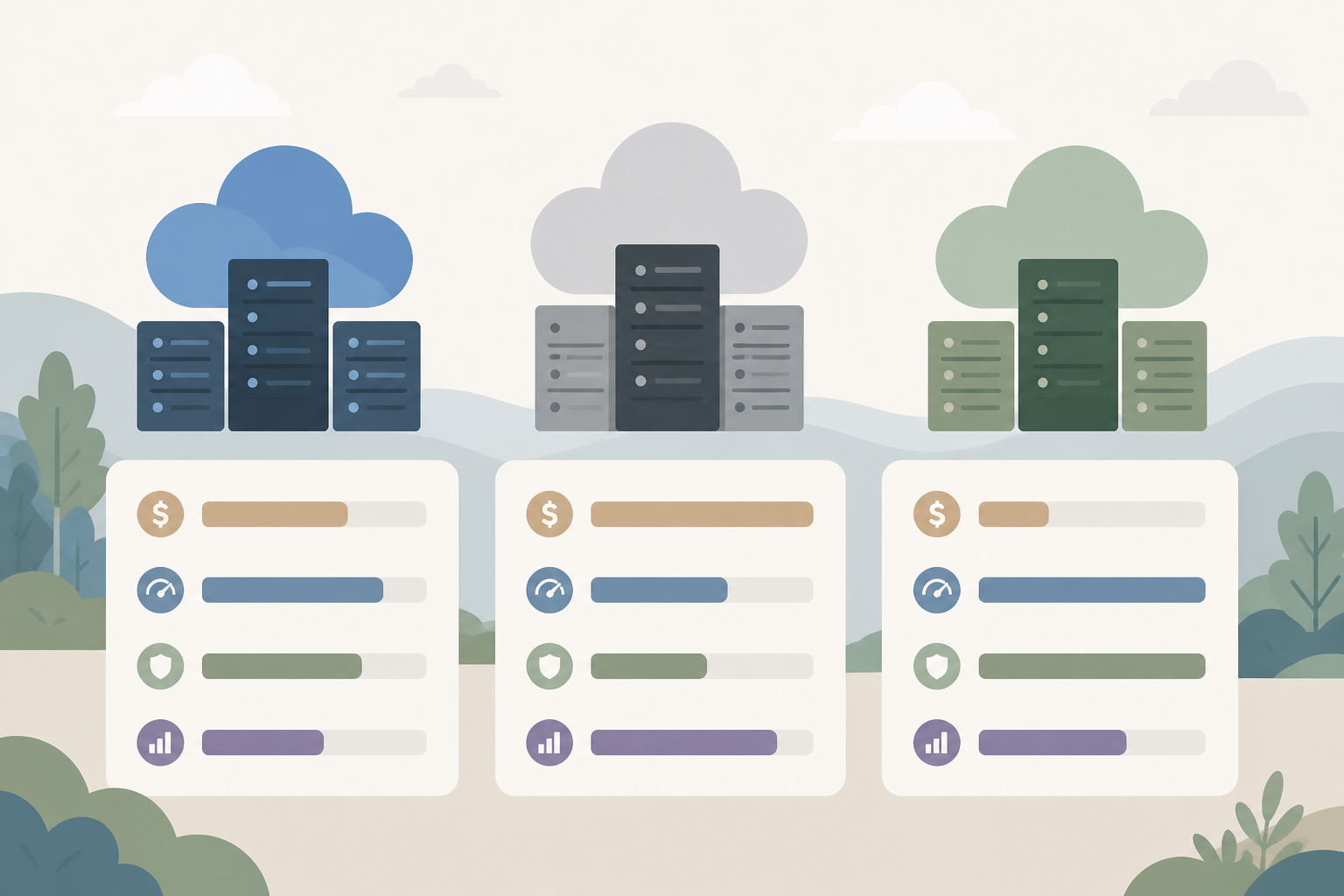
If you only read one row, read the pricing model. It decides how your tool bill behaves when your cloud bill grows.
How each one charges
Finout: a flat fee tied to a spend tier
Finout says it charges a flat annual fee set by your committed spend tier, with no percentage of the bill and no per-seat pricing. It describes the fee as fixed for the contract term, so spend growth inside the tier does not raise the price. As of 2026 its pricing page lists three plans (Business, Pro and Enterprise) with no dollar figures; every plan requires a quote.
Third-party estimates exist. SpendArk, citing buyer-reported data, puts Business at around $1,000 a month for up to roughly $500,000 of annual cloud spend, and Pro at around $2,000 a month for up to $2 million. The same review says Kubernetes support costs about 25% more. Treat these as rough anchors, not prices.
CloudZero: priced against the size of your cloud bill
CloudZero’s own pricing page shows no figures. Its AWS Marketplace listing does: the On Demand option is sold in units of $1,000 of monthly AWS spend at $19 a unit, which works out to 1.9% of monitored AWS spend before any discount. A Custom dimension covers enterprise contracts, and AWS spend above the contracted level bills monthly as additional usage.
Negotiated deals land lower. Vendr, which tracks software purchases, reports a median one-year CloudZero contract of about $41,350, with steeper discounts at higher spend and on multi-year terms. One open question for multi-cloud buyers: the public meter is defined on AWS spend, and Usage.ai notes that the listing does not say how Azure, Google Cloud or SaaS spend is metered. Ask.
Ternary: a fixed subscription by spend tier
Ternary describes its pricing as a fixed-fee annual subscription based on your tier of cloud spend, with no overage charges and no fees for professional services. It can be bought directly, through the AWS or Google Cloud Marketplace, or via channel partners, and MSP partners get preferred pricing. Pricing is not based on seats, so you can invite as many users as you like.
What that means at $200,000 a month
Take a hypothetical company spending $200,000 a month on AWS, or $2.4 million a year, and growing 30% a year.
- CloudZero at the Marketplace list rate: $200,000 ÷ $1,000 × $19 = $3,800 a month, about $45,600 a year. If spend grows 30% during the year and you sized the contract to today’s bill, the extra spend bills as additional usage. Vendr’s median contract of $41,350 suggests most buyers negotiate below list.
- Finout or Ternary: a quoted flat fee for the tier that contains $2.4 million. Growth inside the tier costs nothing extra until renewal. Growth past the tier means a new tier at renewal.
The point is the shape, not the number. A percentage model tracks your bill month by month, up and down. A tiered flat fee steps up at renewal. If you expect spend to jump (a big migration, a new AI product), get each vendor’s price at your current spend and at double it, in writing.
How they allocate cost
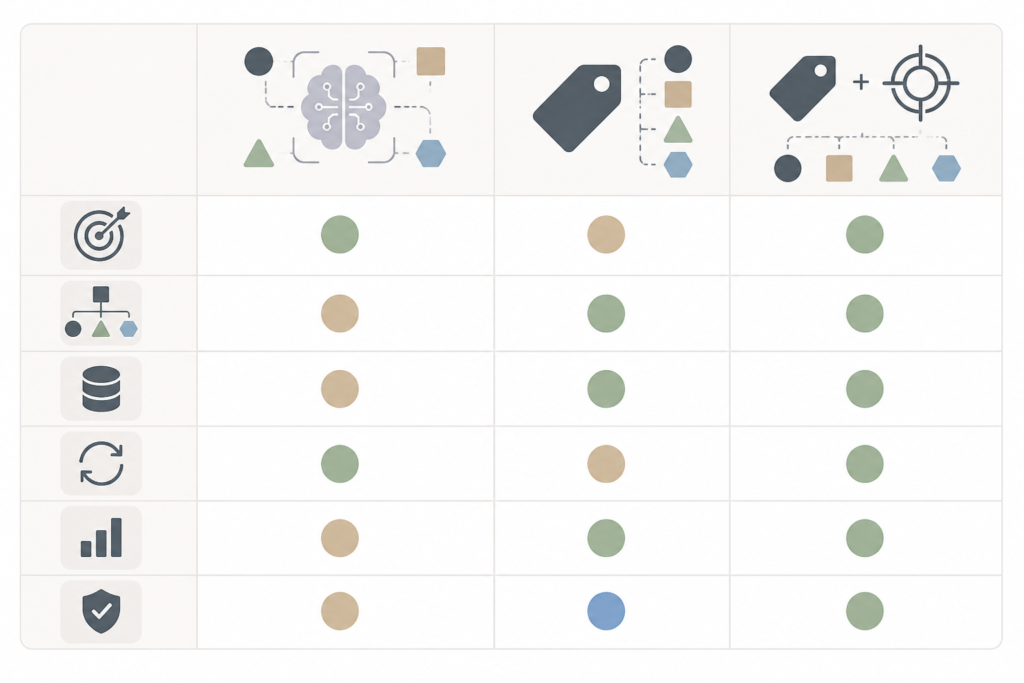
Allocation is where these tools earn or lose their fee. All three can split shared costs and handle untagged spend, but they approach it differently.
Finout leads with MegaBill, a single combined view across cloud, Kubernetes, SaaS and AI providers, and virtual tags that assign cost to owners without changing tags on the resources themselves. Finout says it uses AI to allocate both tagged and untagged spend. This suits companies whose tagging is patchy and who cannot wait for engineering to fix it.
CloudZero organizes spend around dimensions and unit cost telemetry: you send it business metrics (customers, transactions, tenants) and it reports cost per unit. Its AWS Marketplace listing now pitches the product as a control plane for AI economics, with cost per customer, per feature and per outcome. This suits SaaS businesses whose real question is gross margin by customer. Our CloudZero review covers it in more depth.
Ternary covers AWS, Azure, Google Cloud and Oracle Cloud, with commitment management for Reserved Instances and Savings Plans across the three big providers. It started with deep Google Cloud support and has a strong partner and MSP business, including a Rackspace partnership for Google Cloud customers. It was named a Leader in the 2025 ISG Provider Lens for FinOps platforms.
All three are FinOps Foundation members, and FOCUS, the Foundation’s open billing data standard, makes multi-cloud comparison easier whichever you pick. FOCUS 1.3 added split cost allocation in December 2025, and the roadmap for 1.5 adds token and model identity for AI spend.
What to test in a trial
Run each tool on the same slice of real billing data for the same two weeks. Judge on five things:
- Allocation coverage. What share of last month’s spend can each tool assign to an owner by the end of week one, and how much manual rule-writing did it take? This beats any feature list. See cloud cost allocation.
- Unit cost finance accepts. Ask each vendor to produce cost per customer or per transaction for one product line, then show it to your finance lead. See cost per customer.
- Hard sources. List the sources you most need: a second cloud, Kubernetes clusters, Snowflake, Datadog, OpenAI or Anthropic APIs. Make each vendor ingest the hardest two during the trial, not after signing. For AI spend, see FinOps for AI.
- Kubernetes depth. Compare namespace, workload and label views against what you need from Kubernetes cost monitoring.
- Price at 2x. Get the fee at your current spend and at double, plus the rules for overage, renewal and multi-year discounts.
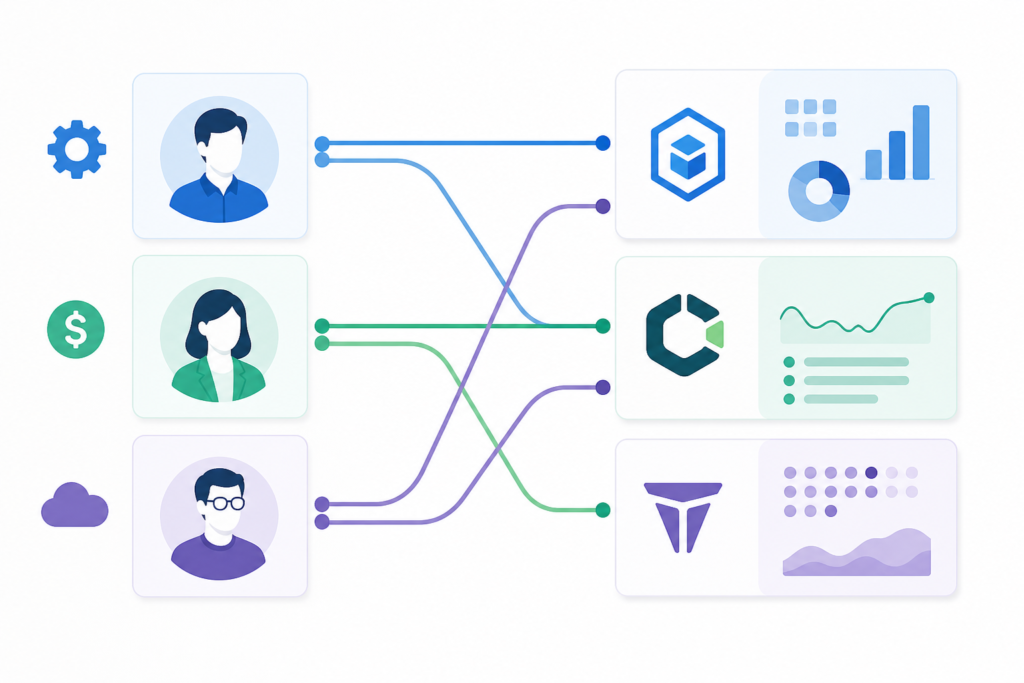
Score each item from 1 to 5 and weight allocation coverage highest. A tool that allocates 90% of spend in a week will save more analyst time than one with better dashboards.
A decision guide
- Your tags are a mess and spend spans many sources. Start with Finout.
- You sell software and need margin per customer or feature. Start with CloudZero.
- Finance owns the budget, you run heavily on Google Cloud, or you are an MSP. Start with Ternary.
- Your cloud bill is under about $25,000 a month on one provider. You may not need any of them yet. Native tools plus a free tier from a tool like Vantage cover a lot. See multi-cloud cost management.
These three are rarely the only candidates. Compare them against the options in CloudHealth alternatives, Cloudability alternatives and Cast AI alternatives for Kubernetes-heavy estates.
Questions people ask
Which is cheapest?
You cannot tell without quotes. CloudZero has the only public rate, 1.9% of monitored AWS spend on Marketplace, and negotiated deals are often lower. Finout and Ternary quote flat fees by tier.
Do any of them charge per user?
None of the three charges per seat. All three let you add unlimited users.
Can I buy through a cloud marketplace?
CloudZero and Ternary sell through AWS Marketplace, and Ternary also through Google Cloud Marketplace. Ask your cloud account team whether marketplace purchases count toward any spend commitment you hold.
Do I need one of these at all?
Not always. A single-cloud team with decent tags can go far with AWS Cost Explorer, budgets and the cloud cost optimization checklist.
Sources
- Finout pricing
- Finout pricing summary (Finout)
- Best Finout alternatives, with buyer-reported pricing (SpendArk)
- CloudZero on AWS Marketplace
- CloudZero pricing data (Vendr)
- CloudZero pricing breakdown (Usage.ai)
- Ternary pricing overview (G2)
- Ternary pricing page
- Introducing FOCUS 1.3 (FinOps Foundation)
- FinOps X 2026 recap (Flexera)