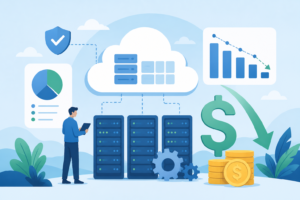
Answer‑first: Multi‑cloud cost management means getting unified visibility, governance, and actionable optimization across AWS, Azure, GCP—and then continuously rightsizing, forecasting, and automating spending. This guide shows exactly how.
Connects to our flagship resource Cloud cost optimization hub
What is multi‑cloud cost management?
Multi‑cloud cost management is the practice of tracking, allocating, controlling, and optimizing cloud spend across multiple providers like AWS, Azure, and Google Cloud from a unified perspective.
Why is multi‑cloud cost management so challenging?
- Fragmented billing formats and discount models per provider—AWS CUR, Azure exports, GCP BigQuery—and no common schema out of the box ([nops.io](https://www.nops.io/blog/multi-cloud-cost-optimization/?utm_source=openai)).
- Inconsistent tagging, naming, and ownership across clouds, making unified allocation hard ([cloudkompas.com](https://cloudkompas.com/blog/multi-cloud-cost-management-strategies-for-aws-azure-and-gcp?utm_source=openai)).
- Hidden costs from underused block storage, orphaned assets, data transfer, unused commitments ([lucidity.cloud](https://www.lucidity.cloud/blog/multi-cloud-cost-management-tools?utm_source=openai)).
- Operational overhead and trust issues when reconciling reports manually across platforms ([cloudkompas.com](https://cloudkompas.com/blog/multi-cloud-cost-management-strategies-for-aws-azure-and-gcp?utm_source=openai)).
How do I get started with practical multi‑cloud cost management?
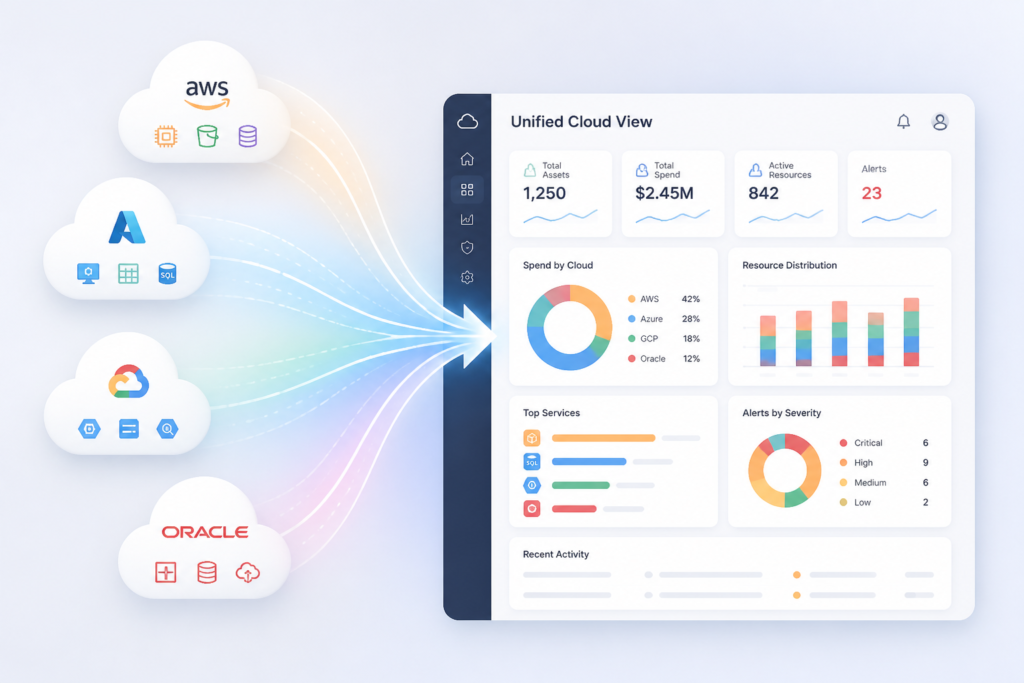
- Pick a single “source of truth” for cost decisions: a centralized cost abstraction layer or platform that ingests all billing feeds—not just reports per cloud ([cloudkompas.com](https://cloudkompas.com/blog/multi-cloud-cost-management-strategies-for-aws-azure-and-gcp?utm_source=openai)).
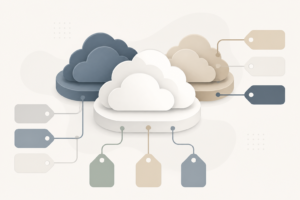
- Define a tagging/labeling “contract” across AWS, Azure, GCP (e.g., team, product, environment). You don’t need identical names, but consistent semantics ([cloudkompas.com](https://cloudkompas.com/blog/multi-cloud-cost-management-strategies-for-aws-azure-and-gcp?utm_source=openai)).
- Establish cost governance: assign ownership, cost budgets, approval workflows, and cost accountability per team or project ([prosperops.com](https://www.prosperops.com/blog/multi-cloud-cost-management-guide/?utm_source=openai)).
- Load billing into your tool of choice, normalize via FOCUS or equivalent, then verify visibility by team, environment, and cloud ([nops.io](https://www.nops.io/blog/multi-cloud-cost-optimization/?utm_source=openai)).
- Implement weekly reviews, alert budgets, and anomaly detection to catch spend spikes early ([theprotec.com](https://www.theprotec.com/blog/multi-cloud-cost-management-tools-tactics-best-practices/?utm_source=openai)).
Which tools help—and how do they differ?
| Use Case | Tool Examples | Key Strengths |
|---|---|---|
| Self‑serve multi‑cloud visibility | Vantage, Costanalyst | Normalized dashboards, virtual tagging, free tier or public pricing ([costanalyst.ai](https://costanalyst.ai/best/multi-cloud-cost-management-tools?utm_source=openai)). |
| Tagging‑challenged environments | Finout | Retroactive virtual tagging across inconsistent estates ([costanalyst.ai](https://costanalyst.ai/best/multi-cloud-cost-management-tools?utm_source=openai)). |
| Enterprise‑scale chargeback/governance | IBM Apptio Cloudability, Flexera One, CloudHealth | Policy enforcement, enterprise reporting, centralized FinOps chargeback ([costanalyst.ai](https://costanalyst.ai/best/multi-cloud-cost-management-tools?utm_source=openai)). |
| Optimizing storage and compute | Lucidity AutoScaler, Kubex, CloudZero | Block storage rightsizing, compute workload optimization, FinOps reporting stack ([lucidity.cloud](https://www.lucidity.cloud/blog/multi-cloud-cost-management-tools?utm_source=openai)). |
There’s no one perfect tool—each fits different needs. Often combining visibility (Vantage) + optimization (Lucidity stack) is practical and effective ([lucidity.cloud](https://www.lucidity.cloud/blog/multi-cloud-cost-management-tools?utm_source=openai)).
What optimization levers should you leverage?
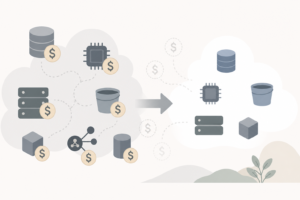
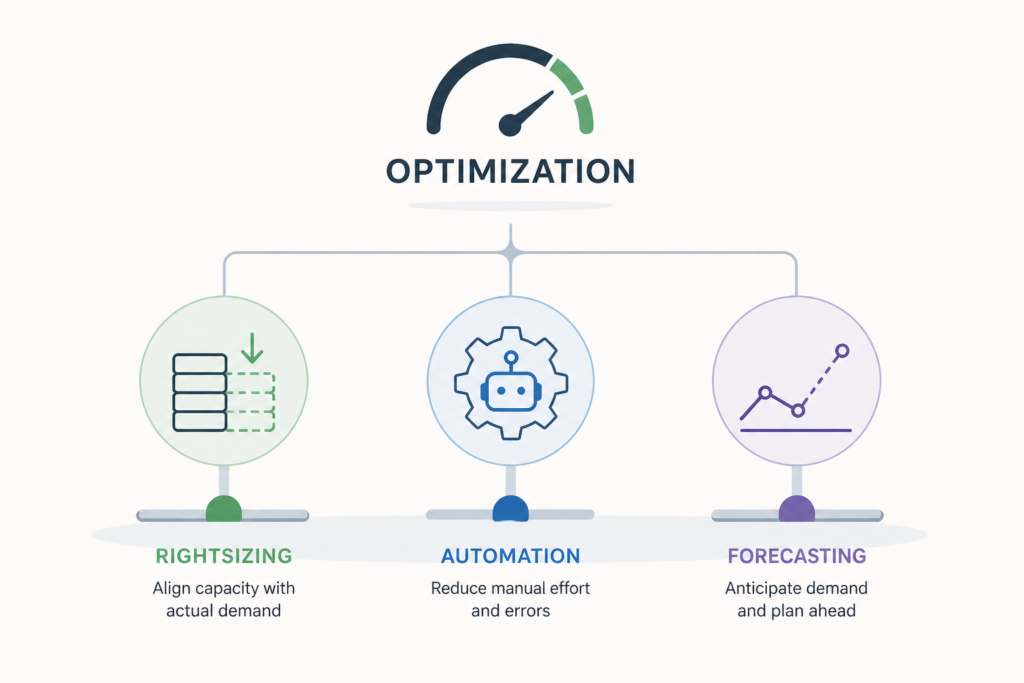
- Rightsize resources: stop idle VMs, adjust storage tiers; enterprises waste up to ~70% of block storage ([lucidity.cloud](https://www.lucidity.cloud/blog/multi-cloud-cost-management-tools?utm_source=openai)).
- Automate non‑prod shutdowns: turn off dev/test environments after hours to save dramatically.
- Commitment optimization: model AWS Savings Plans, Azure Reservations, GCP CUDs separately; track unutilized coverage ([nops.io](https://www.nops.io/blog/multi-cloud-cost-optimization/?utm_source=openai)).
- Reduce data transfer costs: treat cross‑cloud interconnects and transfer fees as core cost—not an afterthought ([arxiv.org](https://arxiv.org/abs/2606.01440)).
What governance cadence works?
- Weekly: review cost dashboards, reset anomaly alerts, address overspend.
- Monthly: update forecasts with growth projections, new project costs, commitment planning.
- Quarterly: revisit tagging contract, commitments utilization, forecasting accuracy and ownership alignment ([theprotec.com](https://www.theprotec.com/blog/multi-cloud-cost-management-tools-tactics-best-practices/?utm_source=openai)).
What does a practical rollout look like (Day 1–90)?
- Days 1–30: centralize billing feeds, establish tagging standard, assign cost owners.
- Days 31–60: model budgets, enable alerts, start anomaly detection.
- Days 61–90 and beyond: rightsizing, automate schedules, commit planning, idle cleanup, refine forecasts ([theprotec.com](https://www.theprotec.com/blog/multi-cloud-cost-management-tools-tactics-best-practices/?utm_source=openai)).
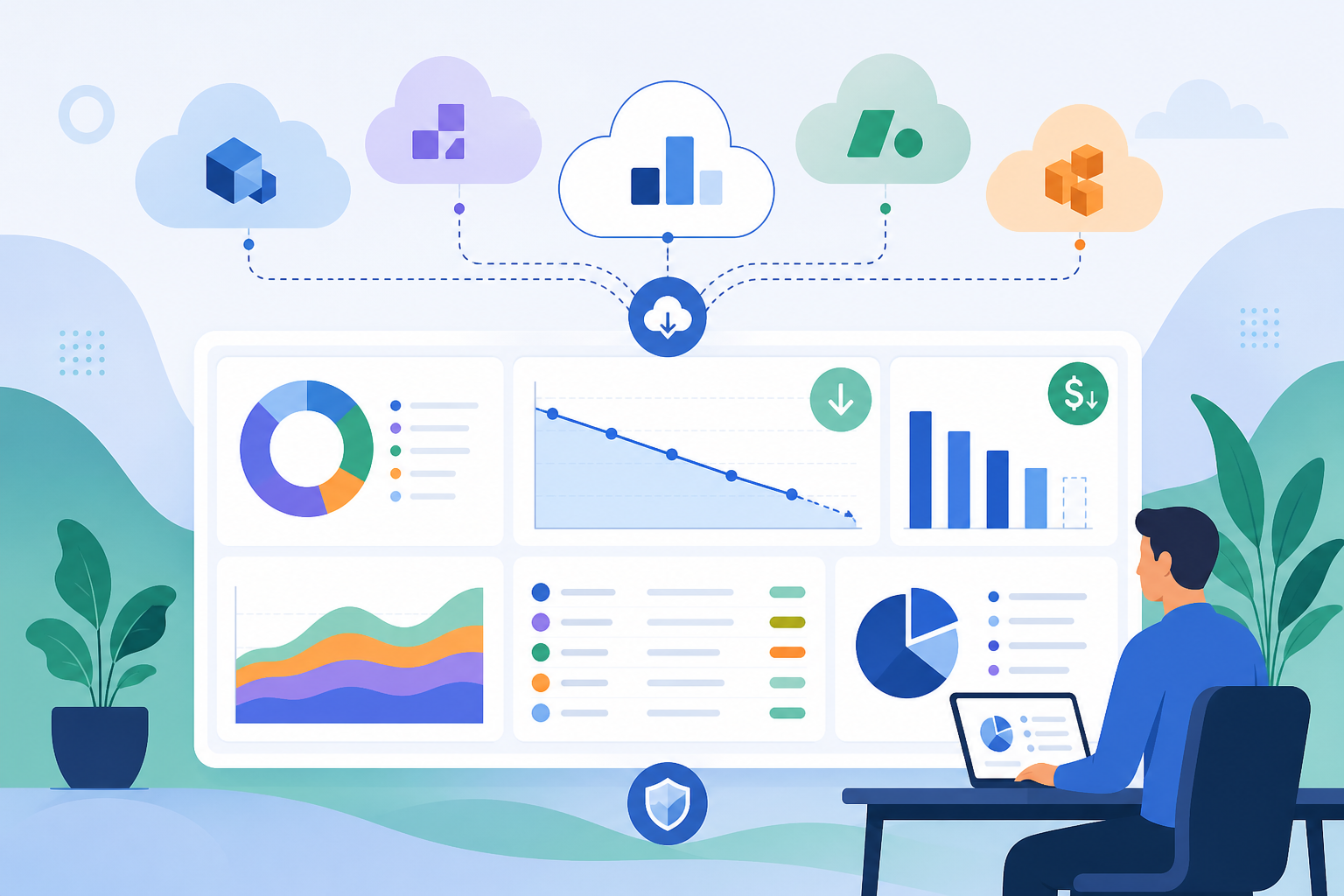
Inline illustration—visibility consolidation
How do you measure success?
- Percent reduction in unused block storage or idle compute (e.g. 40–70%)—via Lucidity stack data or equivalent ([lucidity.cloud](https://www.lucidity.cloud/blog/multi-cloud-cost-management-tools?utm_source=openai)).
- Forecast variance: actual spend vs forecast (ideal <5%).
- Commitment utilization rate per provider.
- Cost per team or environment trends, normalized across clouds.
Inline illustration—optimization levers
Internal link to explore next
After this, dive deeper into our multi‑cloud forecasting and FinOps automation techniques on advanced cloud budgeting and automation.
Frequently Asked Questions
- What’s the difference between multi‑cloud cost “management” and “optimization”?
Cost management includes visibility, governance, tagging, and forecasting. Optimization is the active reduction of unnecessary spend via rightsizing, shutdowns, commitments, and automation. - Can I start without a third‑party tool?
Yes—use native billing exports and a spreadsheet for visibility and tagging. But for scale and cross‑cloud normalization, third‑party tools save time and reduce risk. - How do I handle inconsistent tagging?
Define tagging policies across clouds first. If tagging is incomplete, use tools with virtual tagging to retroactively allocate spend without tagging cleanup ([costanalyst.ai](https://costanalyst.ai/best/multi-cloud-cost-management-tools?utm_source=openai)). - How often should I revisit commitment strategies?
Quarterly—commitments should be reviewed for utilization and expiry, and new plans purchased when forecast supports it. - What savings are realistic?
Block storage alone can drop by 40–70% after implementing rightsizing and storage tiering ([lucidity.cloud](https://www.lucidity.cloud/blog/multi-cloud-cost-management-tools?utm_source=openai)). Compute and automation can add further gains—but real numbers depend on your workload mix.
About the Author
Nhon Dang is a cloud infrastructure and operations professional with over 10 years of hands‑on experience in cloud services, infrastructure, and business operations. His expertise spans the design, deployment, and operation of cloud platforms and managed services, including virtual machines (VMs), Kubernetes (K8s), object storage (S3), managed databases, Apache Kafka, and cloud GPU infrastructure. Throughout his career, Nhon has worked closely with cloud infrastructure and service operations, gaining practical experience in building reliable, scalable, and cost‑efficient cloud environments. His work combines technical expertise with business and operational insight, giving him a practical perspective on how cloud technologies perform in real‑world production environments. Nhon writes about cloud infrastructure, Kubernetes, DevOps, distributed systems, cloud computing, infrastructure operations, and cloud service management, sharing insights based on hands‑on experience rather than purely theoretical knowledge. His goal is to provide practical, technically accurate, and experience‑driven guidance that helps engineers, technical teams, and businesses make better decisions when adopting and operating cloud technologies.