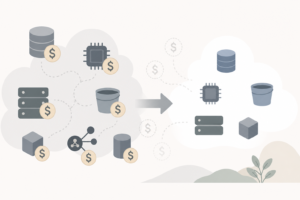

Cloud cost allocation directly links usage to teams or workloads using tagging and financial reporting models so you can see, report, and ultimately charge internal spend accurately. This guide shows how to set up tagging, run showback reports, and evolve into chargeback with low friction and high trust.
What is cloud cost allocation?
Cloud cost allocation is the structured assignment of cloud expenses to internal consumers—such as teams, applications, or business units—using tagging and accounting methods.
Why start with tagging? What makes a tagging strategy effective?
Tags are metadata labels on resources used to attribute cloud costs. Effective tagging enables attribution by owner, project, environment, cost-center, and workload category—this is the foundation for showback and chargeback.
- Minimal viable taxonomy: cost-center, environment (prod/staging/dev), application/service name, owner, data-classification—covers most allocation needs efficiently ([varcio.com](https://varcio.com/blog/multi-cloud-cost-allocation-tagging-chargeback)).
- Enforce tags during infrastructure creation—via policy-as-code (e.g., AWS SCP, Azure Policy), IaC modules (Terraform/Pulumi), or CI/CD gating—to avoid retroactive failures and ensure compliance ([varcio.com](https://varcio.com/blog/multi-cloud-cost-allocation-tagging-chargeback?utm_source=openai)).
- Track untagged spend continuously and report on compliance. Tag drift erodes attribution accuracy over time ([yobitel.com](https://yobitel.com/knowledge-base/showback-chargeback?utm_source=openai)).
How do showback and chargeback differ—and why sequence matters?
| Model | Definition | Purpose |
|---|---|---|
| Showback | Visible reporting of costs to teams, without budget transfer | Builds awareness, trust, behavioral change |
| Chargeback | Internal billing of costs to teams’ budgets via financial processes | Enables formal accountability and cost ownership |
Showback = visibility; chargeback = financial accountability. Most organizations run showback for 1–2 quarters until tagging accuracy reaches ~95%, before switching to chargeback([varcio.com](https://varcio.com/blog/multi-cloud-cost-allocation-tagging-chargeback?utm_source=openai)).
How to implement showback?
- Define allocation dimensions (e.g., project, team, environment).
- Activate cost allocation tags and use cost explorer/grouping tools to report by tag combinations ([docs.aws.amazon.com](https://docs.aws.amazon.com/solutions/cloud-financial-management-on-aws/?utm_source=openai)).
- Use cost categories where tag combinations are complex or derive meta-groupings ([docs.aws.amazon.com](https://docs.aws.amazon.com/solutions/cloud-financial-management-on-aws/?utm_source=openai)).
- Run dashboards and deliver per-team, per-project reports—visible but non-financial.
How to evolve into chargeback?
- Ensure tagging coverage and allocation accuracy are high via showback visibility.
- Define rules for untaggable/shared cost — e.g., proportional split by tagged spend, flat allocation, or usage metrics (CPU/memory or data volume) ([docs.aws.amazon.com](https://docs.aws.amazon.com/solutions/cloud-financial-management-on-aws/?utm_source=openai)).
- Use cost categories or billing conductor (in AWS) to automate cost splits and attach custom line items ([docs.aws.amazon.com](https://docs.aws.amazon.com/solutions/cloud-financial-management-on-aws/?utm_source=openai)).
- Integrate with internal financial systems—via journal vouchers, internal invoices—to push budget impact ([docs.aws.amazon.com](https://docs.aws.amazon.com/whitepapers/latest/tagging-best-practices/cost-allocation-tags.html?utm_source=openai)).
- Run showback for 60–90 days with teams able to dispute mapping before chargeback is live ([blog.costdefender.io](https://blog.costdefender.io/cloud-cost-allocation-chargeback-model?utm_source=openai)).
- Empower teams by giving budget control to optimize spend—chargeback should create capacity, not just punishment ([blog.costdefender.io](https://blog.costdefender.io/cloud-cost-allocation-chargeback-model?utm_source=openai)).
Practical allocation models
- Direct allocation (tag-based)—resource-level tags map spending directly to the owner. Highest accuracy, but requires tag completeness ([blog.costdefender.io](https://blog.costdefender.io/cloud-cost-allocation-chargeback-model?utm_source=openai)).
- Proportional/shared allocation—shared or untagged costs are allocated based on each team’s share of tagged spend or other agreed metrics ([blog.costdefender.io](https://blog.costdefender.io/cloud-cost-allocation-chargeback-model?utm_source=openai)).
- Fixed allocation—predefined cost share for shared services (e.g., 50/50 split gateway cost), simpler but lower fidelity ([blog.costdefender.io](https://blog.costdefender.io/cloud-cost-allocation-chargeback-model?utm_source=openai)).
How does cloud cost allocation fit into broader cost optimization?
It links resource-level visibility to financial accountability, enabling teams and leadership to identify optimization ROI, justify cleanup investments, or spot wastage by owner or workload ([docs.aws.amazon.com](https://docs.aws.amazon.com/whitepapers/latest/tagging-best-practices/cost-allocation-tags.html?utm_source=openai)).
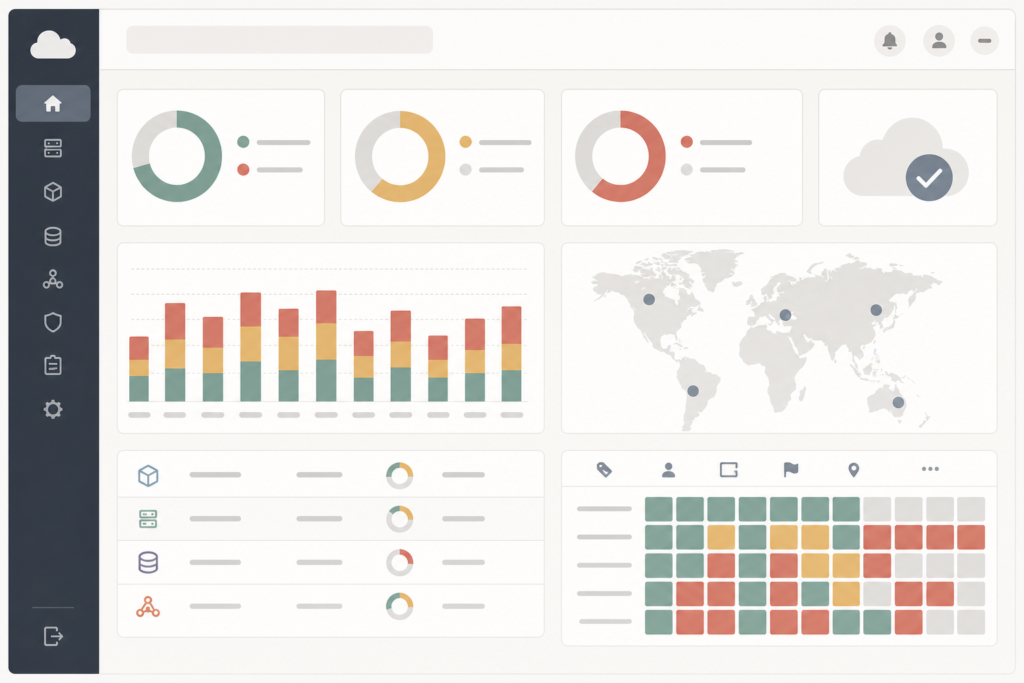
Common gaps to fill beyond existing guides
- Run enforcement, allocation, budgeting, showback, then chargeback as a linked chain—not isolated pieces ([peerobyte.com](https://peerobyte.com/blog/cloud-tagging-budgets-and-chargeback-how-to-allocate-costs-by-project-and-avoid-runaway-costs/?utm_source=openai)).
- Handle tagging drift—set automated audits and alerts to prevent coverage decay ([reddit.com](https://www.reddit.com/r/FinOps/comments/1vt8x1s/how_much_can_good_tagging_actually_solve_when_it/?utm_source=openai)).
- Collaborative design—chargeback models require joint engineering + finance consensus to be trusted and effective ([blog.costdefender.io](https://blog.costdefender.io/cloud-cost-allocation-chargeback-model?utm_source=openai)).
- Budget authority—teams charged should have control over reducing spend, not penalized without agency ([blog.costdefender.io](https://blog.costdefender.io/cloud-cost-allocation-chargeback-model?utm_source=openai)).
- Verification before publish: actual % tagging coverage, typical shared cost ratios and dispute resolution workflows.
Showback vs Chargeback: key decision flow
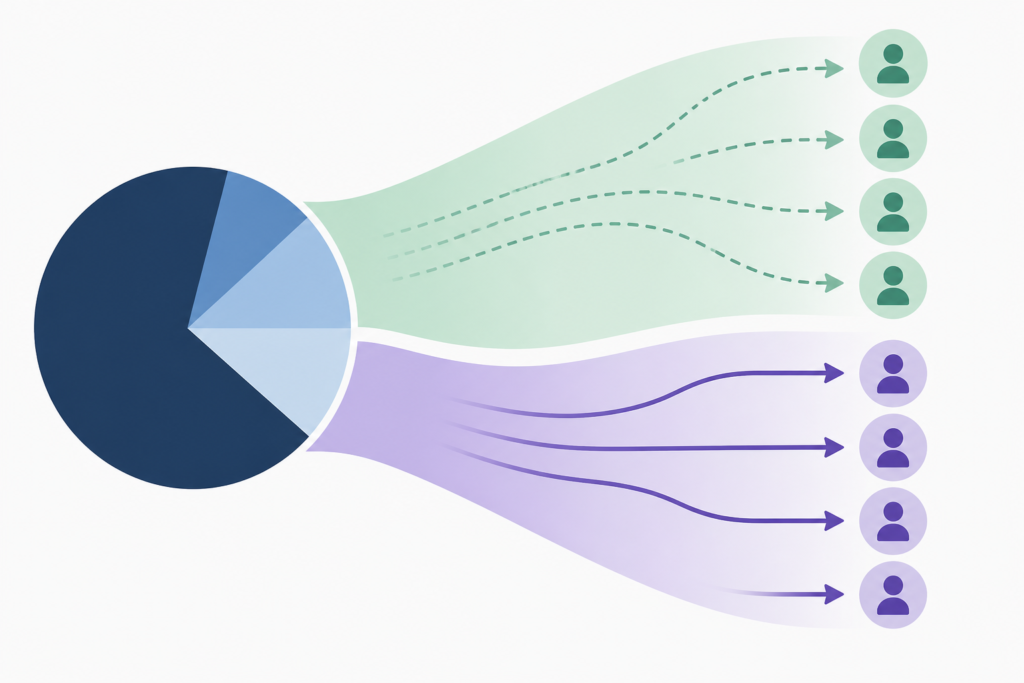
- Do teams know their cloud cost? No → start with showback.
- Tagging accurate (>90%) and agreed rules exist? Yes → pilot chargeback with visibility first.
- Is there budget ownership and ability to act? Yes → shift fully to chargeback; if not, refine governance.