
Last updated: September 15, 2026
This guide shows how to reduce AWS Lambda costs through practical, measurable actions—from right-sizing and architecture choices to monitoring, concurrency controls, and savings plans.
What is aws lambda cost optimization?
AWS Lambda cost optimization is the process of minimizing your serverless compute spending by tuning function configuration, architecture, usage patterns, and purchasing options.
Why does lambda cost add up fast?
- Billing is per invocation and per millisecond—cost grows with memory, duration, and number of requests ([aws.amazon.com](https://aws.amazon.com/blogs/compute/optimizing-your-aws-lambda-costs-part-1/)).
- Over-provisioned memory inflates compute costs, idle scaling without guardrails causes runaway spending ([aws.amazon.com](https://aws.amazon.com/blogs/compute/understanding-techniques-to-reduce-aws-lambda-costs-in-serverless-applications/)).
How do I choose the right memory size (right‑sizing)?
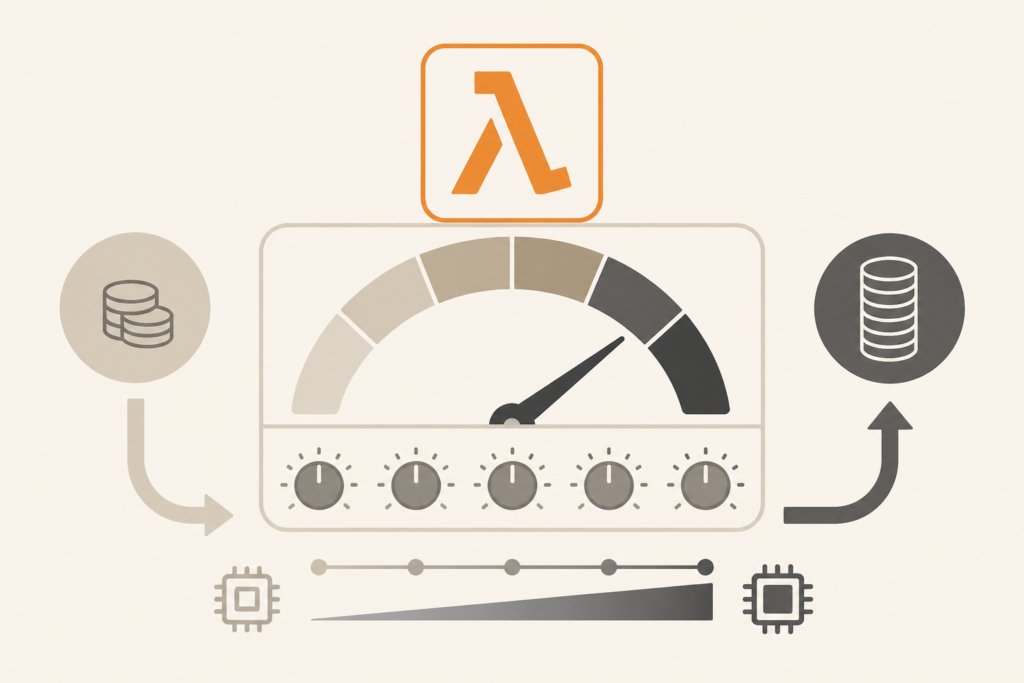
- Use AWS Lambda Power Tuning tool or Compute Optimizer to benchmark different memory allocations and identify the lowest cost-duration sweet spot ([aws.amazon.com](https://aws.amazon.com/blogs/compute/optimizing-your-aws-lambda-costs-part-1/)).
- Automate tuning by integrating results into CI/CD, adjusting memory on deploy ([aws.amazon.com](https://aws.amazon.com/blogs/compute/optimizing-your-aws-lambda-costs-part-1/)).
- Keep checking after code changes—memory needs shift over time with payload or logic updates.
Should I use ARM/Graviton architecture?
Yes—ARM64 (Graviton) can deliver up to ~20% cost savings over x86_64 with similar or better runtime performance ([builder.aws.com](https://builder.aws.com/content/38vfMsEzjxu9OI7YTWa9yMDY5k0/lambda-best-practices-a-beginners-guide)).
Test via alias-weighted rollout and compare metrics (duration, error rate, cost) by architecture before full switch.
Can savings plans help with Lambda?
Yes—Compute Savings Plans apply to Lambda Managed Instances, reducing compute costs by committing to consistent usage ([aws.amazon.com](https://aws.amazon.com/lambda/pricing/)).
Example: processing 100 M requests/month on m7g.xlarge with a 3‑yr Savings Plan can cost ~$160/month (requests, EC2, management fee breakdown provided) ([aws.amazon.com](https://aws.amazon.com/lambda/pricing/)).
How can I prevent runaway costs?
- Set reserved concurrency on functions to cap maximum simultaneous executions ([docs.aws.amazon.com](https://docs.aws.amazon.com/lambda/latest/dg/best-practices.html?utm_source=openai)).
- Throttle sources (API Gateway, queues) and implement exponential backoff and retry limits to avoid retry storms.
- Set billing and anomaly alerts early so you detect cost spikes within hours not days ([reddit.com](https://www.reddit.com/r/aws/comments/1mw89od)).
How should I optimize logging and event processing?
Move high-volume logs from CloudWatch to S3 (Glacier/IA tiers) to save on storage costs ([aws.amazon.com](https://aws.amazon.com/blogs/compute/optimizing-your-aws-lambda-costs-part-2/)).
With stream sources (Kinesis, SQS), increase batch size and use batch windowing to amortize invocation overhead ([docs.aws.amazon.com](https://docs.aws.amazon.com/lambda/latest/dg/best-practices.html)).
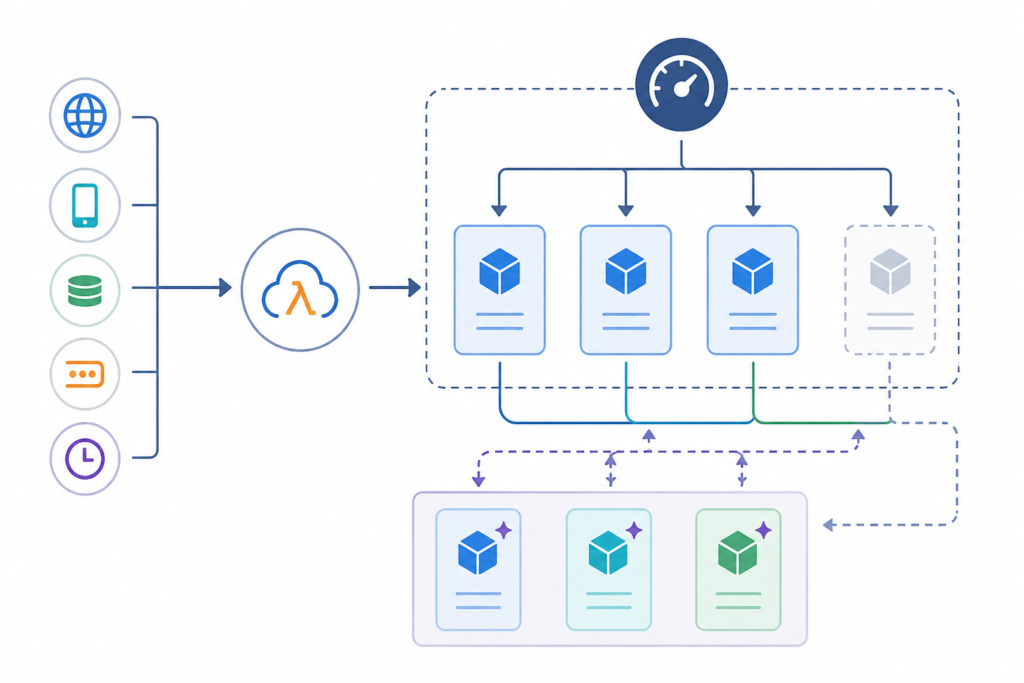
Enable partial batch response for stream processing to only retry failed records, cutting unnecessary reprocessing ([docs.aws.amazon.com](https://docs.aws.amazon.com/lambda/latest/dg/best-practices.html)).
What code-level best practices reduce cost?
- Initialize SDKs and external connections outside the handler for reuse on warm starts ([docs.aws.amazon.com](https://docs.aws.amazon.com/lambda/latest/dg/best-practices.html)).
- Keep package sizes minimal, avoid loading heavy dependencies or layers unless needed ([aws.amazon.com](https://aws.amazon.com/blogs/compute/optimizing-your-aws-lambda-costs-part-1/)).
- Write idempotent code to handle retries and duplicates gracefully; reduce failures and reprocessing overhead ([docs.aws.amazon.com](https://docs.aws.amazon.com/lambda/latest/dg/best-practices.html)).
When should I use Lambda Managed Instances?
If you run steady, high-volume workloads, this mode lets Lambda run on provisioned EC2 with ability to apply Savings Plans, and process multiple concurrent requests per instance—cost effective at scale ([aws.amazon.com](https://aws.amazon.com/lambda/pricing/)).
Summary Comparison: Optimization Techniques
| Technique | When to Use | Effect |
|---|---|---|
| Right‑sizing memory | All functions | Reduce duration×memory cost |
| ARM/Graviton | Functions with compatible deps | ~20% cost save |
| Compute Savings Plans | Managed Instances, steady load | Significant EC2 cost savings |
| Reserved concurrency | High‑risk, auto‑scaling functions | Prevents runaway cost |
| Logging to S3 | High log volume apps | Lower storage cost |
| Batch tuning / partial retry | Stream processing | Lower invocation count & reprocessing |
| Boot resource reuse | All functions | Reduced cold-start & duration |
Inline architecture diagram
Monitoring & automation tools
- Use Compute Optimizer and Lambda Power Tuning for automatic recommendations ([docs.aws.amazon.com](https://docs.aws.amazon.com/wellarchitected/latest/serverless-applications-lens/cost-and-performance-optimization.html)).
- Push metrics and alerts via CloudWatch, Cost Explorer, FinOps dashboards.
- Integrate resource tuning into CI/CD via outputs from tuning tools.
Operational caveats
- Memory tuning may change performance characteristics—always benchmark.
- Batching increases latency—balance throughput vs real-time needs.
- Reserved concurrency can cause throttles if set too low—monitor invocation errors.
Frequently Asked Questions
- See below.
Need a broader cost strategy for your AWS account? Check out our pillar guide on AWS cost optimization. For more on serverless-specific tactics, see Serverless cost strategies.
For Lambda monitoring and FinOps practices, see Lambda monitoring best practices.
Studio founded by Hayao Miyazaki, Isao Takahata, and Toshio Suzuki in 1985, has captivated audiences worldwide Studio Ghibli, the legendary Japanese animation studio founded by Hayao Miyazaki, Isao.