
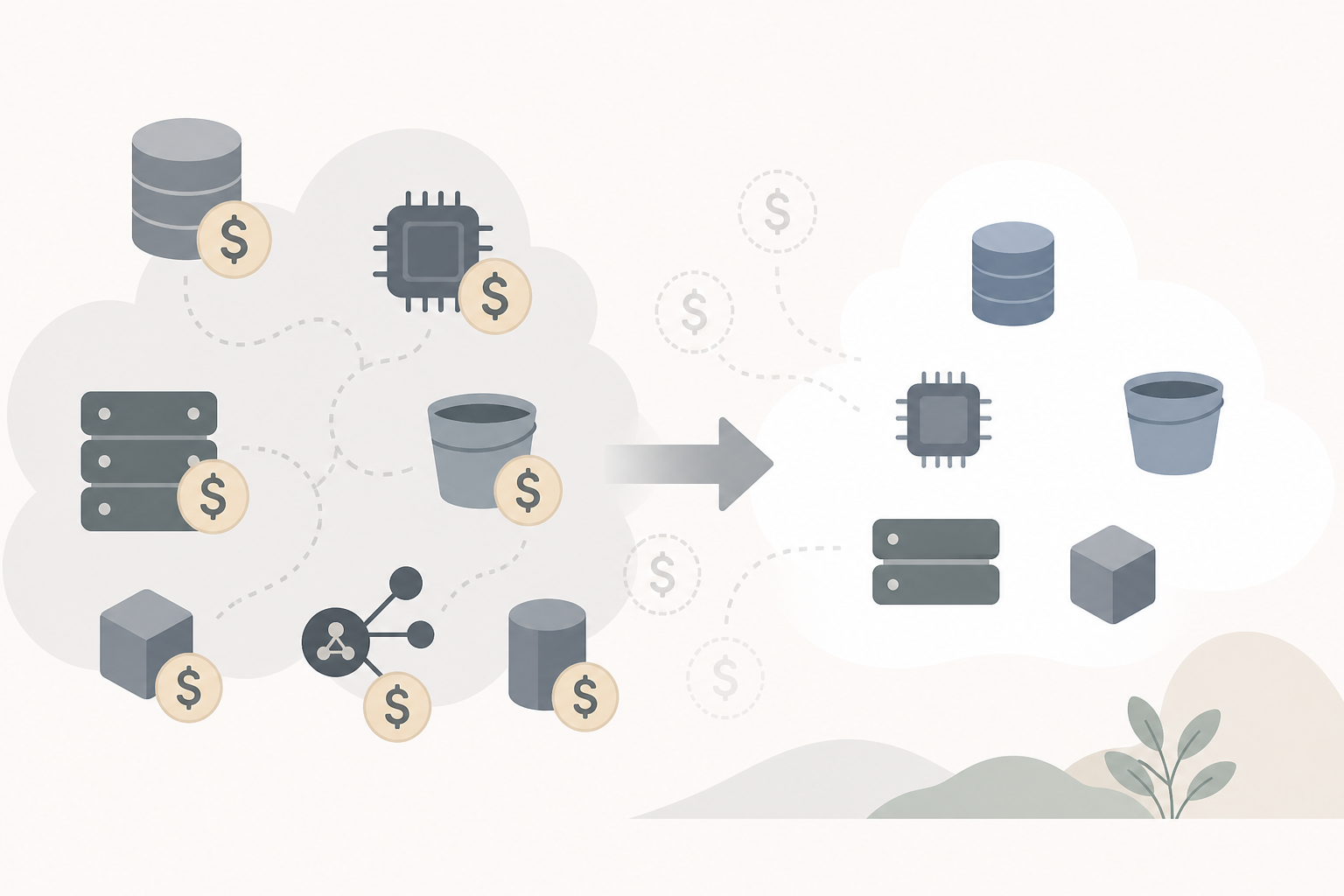
What Is Cloud Waste?
Cloud waste is unnecessary spending on cloud resources—compute, storage, networking, or services—that deliver no meaningful business value. It includes idle, orphaned, over‑provisioned resources and spend on commitment‑based discounts that no longer match usage patterns.([phoenixnap.com](https://phoenixnap.com/glossary/cloud-waste?utm_source=openai))
Why Should You Care About Cloud Waste?
Cloud waste quietly compounds. Estimates show organizations waste 30‑50% of their cloud budget through unused instances, forgotten environments, and inefficiencies—spend that could instead fund innovation.([codeandpepper.com](https://codeandpepper.com/cloud-cost-optimization/?utm_source=openai)) Flexera’s 2026 State of the Cloud Report found wasted IaaS/PaaS spend reached ~29%, up from prior years due to AI and new service complexity.([usage.ai](https://www.usage.ai/blogs/finops/waste/cloud-waste/))
What Are the Common Types of Cloud Waste?
- Idle and orphaned resources: VMs, storage volumes, load balancers or IPs running without doing work.([hbs.net](https://www.hbs.net/blog/cloud-cost-optimization?utm_source=openai))
- Over‑provisioned compute or storage: Instances sized for peak load but used sparingly.([hbs.net](https://www.hbs.net/blog/cloud-cost-optimization?utm_source=openai))
- Unused commitment discounts: Reserved Instances, Savings Plans, or Committed Use Discounts paid for but under‑utilized.([usage.ai](https://www.usage.ai/glossary/cloud-waste/?utm_source=openai))
- Misconfiguration and inefficiency: High‑cost storage tiers, redundant pipelines or test environments run continuously.([tenhats.com](https://tenhats.com/identifying-your-cloud-waste-how-to-reduce-cloud-storage/?utm_source=openai))
How Does Cloud Waste Arise?
Self‑service provisioning speeds innovation but often lacks accountability. Resources remain after jobs end. Fragmented visibility and missing tagging make accountability hard.([hbs.net](https://www.hbs.net/blog/cloud-cost-optimization?utm_source=openai)) Without real‑time visibility, teams discover waste months later.([usage.ai](https://www.usage.ai/glossary/cloud-waste/?utm_source=openai)) The rise of AI workloads has further driven complexity and cost visibility gaps.([techradar.com](https://www.techradar.com/pro/ai-workloads-are-increasing-wasted-cloud-spend-for-the-first-time-in-5-years-but-ai-governance-teams-might-be-a-solution?utm_source=openai))
How to Eliminate Cloud Waste: Tactical First, Then Structural
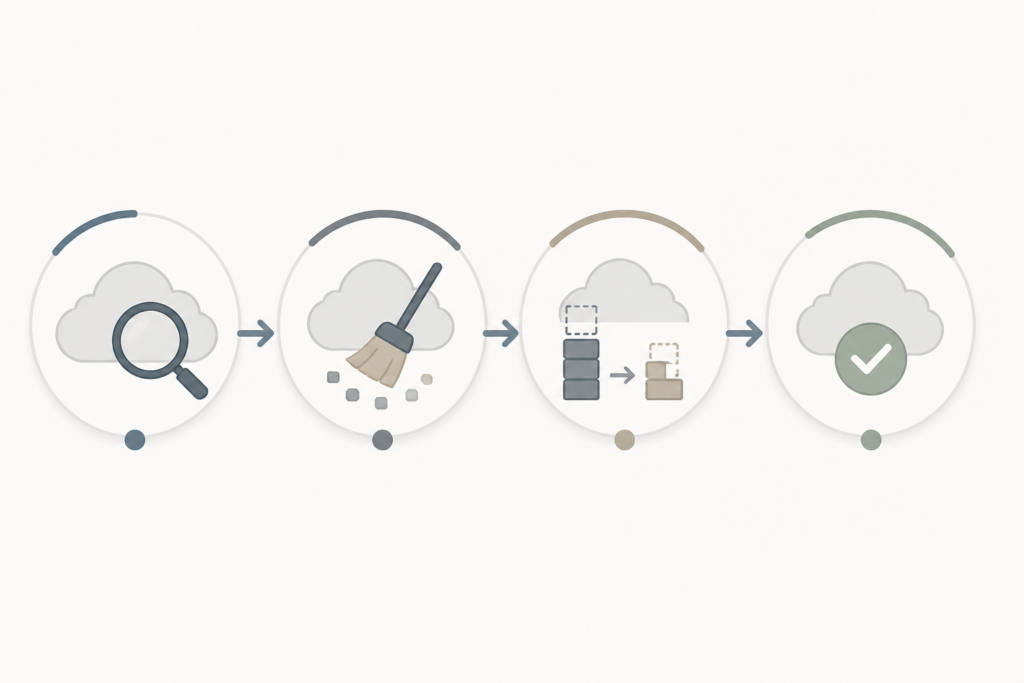
Eliminating cloud waste should follow a deliberate sequence:
- Visibility first: Build unified, real‑time visibility across accounts, workloads, and services. Clean tagging and cost dashboards are foundational.([costanalyst.ai](https://costanalyst.ai/blog/cloud-cost-optimization-best-practices?utm_source=openai))
- Kill idle and zombie resources: Delete non‑production instances, unattached storage, unused load balancers. These often deliver the fastest savings—10‑20% of monthly spend or more.([codeandpepper.com](https://codeandpepper.com/cloud-cost-optimization/?utm_source=openai))
- Rightsize under‑utilized resources: Use utilization data (CPU, memory, network) to downsize safely. Most setups reveal 15‑30% of instances are oversize.([hbs.net](https://www.hbs.net/blog/cloud-cost-optimization?utm_source=openai))
- Commit to discounts for steady workloads: Apply Reserved Instances, Savings Plans, or Committed Use Discounts only after removing waste. These offer 30‑72% off on‑demand pricing.([usage.ai](https://www.usage.ai/glossary/cloud-waste/?utm_source=openai))
- Drive sustainable governance and automation: Implement tagging, lifecycle policies, CI/CD optimization, and capacity controls to prevent drift.([learn.microsoft.com](https://learn.microsoft.com/en-us/azure/well-architected/sustainability/sustainability-cost-optimization-recommendations?utm_source=openai))
How to Implement: Step‑by‑Step Plan
(Illustration: visibility dashboard highlighting idle resources)
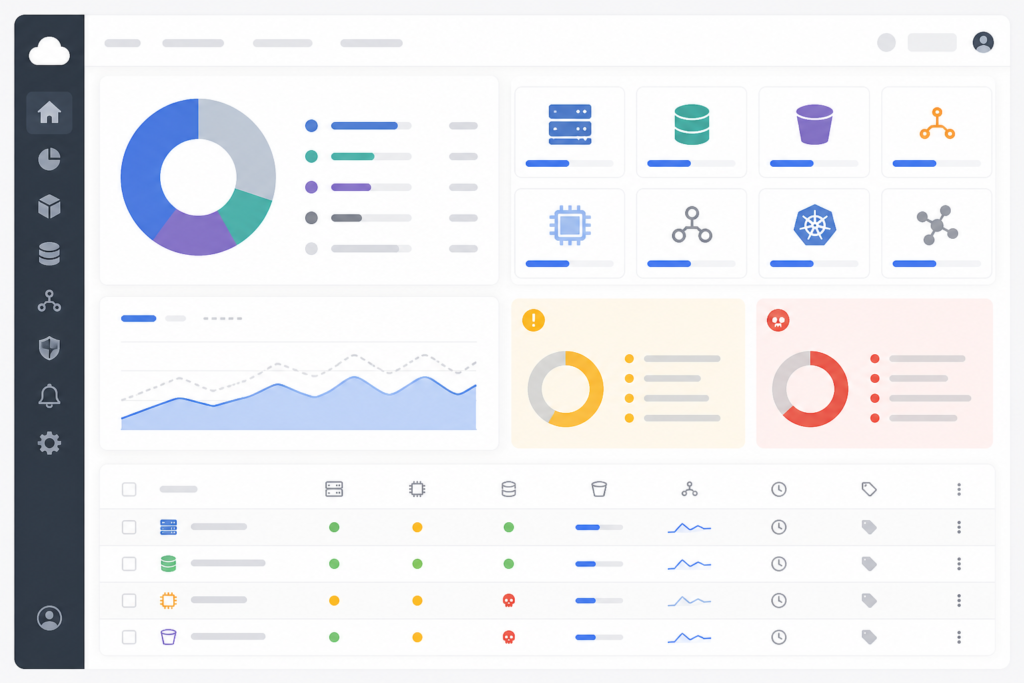
- Audit and unify cost data: Aggregate cost data across cloud platforms. Build dashboards finance and engineering trust. Establish tagging rules.
- Run idle‑resource sweeps: Use cloud tooling (AWS Trusted Advisor, Azure Advisor, GCP Recommender) to find idle or untagged resources.
- Rightsize compute/storage: Review utilization trends. Downsize or move workloads to lower‑cost tiers.
- Apply discount commitments: Purchase commit plans aligned to stable usage. Monitor coverage monthly.
- Automate lifecycle operations: Tag new resources, enforce shutdown schedules for non‑production, apply retention and tiering policies.
- Maintain ongoing review: Schedule recurring audits, alerts for anomalies, and team‑review sessions—embed cost optimization as part of ops culture.
Sample Impact Estimate
| Stage | Typical Savings | Description |
|---|---|---|
| Idle cleanup | 10‑20% | Removing zombie and unused resources. |
| Rightsizing | 15‑30% | Downsizing under‑utilized infrastructure. |
| Commit discounts | 30‑60% per resource | Applying Reserved/committed pricing. |
Note: actual figures depend on your environment. Verify with your own cost data. Flagged under verify_before_publish.
How to Prevent Waste from Returning?
- Governance and tagging enforcement: Require project, environment, and owner tags—with guardrails.
- Automate idle detection and cleanup: Scheduled jobs that shut down dev/test outside hours.
- Embed cost in culture: Add cost metrics to sprint reviews and dashboards.
- Educate teams: Share per‑team cost reports so owners understand consequences of idle or over‑capacity resources.([techradar.com](https://www.techradar.com/pro/ai-workloads-are-increasing-wasted-cloud-spend-for-the-first-time-in-5-years-but-ai-governance-teams-might-be-a-solution?utm_source=openai))
How Does Eliminating Cloud Waste Fit Into Cost Optimization?
Eliminating waste is the foundation of cloud cost optimization. Once you’ve removed non‑value spending, you can optimize what’s left through architectural efficiencies, pricing strategies, and organizational FinOps practices.([usage.ai](https://www.usage.ai/blogs/finops/waste/cloud-waste/?utm_source=openai))
Cloud optimization isn’t about spending less—it’s about spending accurately. Right‑sized, governed, performant infrastructure at minimal cost.([techtarget.com](https://www.techtarget.com/it-infrastructure/tip/What-is-cloud-cost-optimization-16-best-practices-to-embrace?utm_source=openai))
Frequently Asked Questions
(Illustration: step list of cloud‑waste elimination process)
- What qualifies as cloud waste?
- Cloud waste includes idle, under‑utilized, misconfigured, or unused cloud resources that incur cost without delivering value.
- How much cloud waste is typical?
- Organizations often waste 30‑50% of cloud spend. Flexera’s 2026 report estimates around 29% wasted IaaS/PaaS costs.
- Where do you start eliminating waste?
- Start with visibility: tagging, dashboards, and unified cost data. Then kill idle resources and right‑size before making commitments.
- Can commitments like Reserved Instances increase waste?
- Yes—if applied before eliminating waste, commitment plans lock you into paying for unused capacity. Optimize first, commit second.
- How do you sustain cost optimization?
- Through automation, governance policies, regular audits, and cultural accountability—treat cost like uptime, not a one‑off project.
Related Reading
See Cloud Cost Optimization pillar page for a broader strategic view of optimizing cloud spend across architecture, procurement, and organizational practices.
About the Author
Nhon Dang is a cloud infrastructure and operations professional with over 10 years of hands‑on experience in cloud services, infrastructure, and business operations. He writes to help engineers, technical teams and businesses make better, practical decisions in building and operating cloud environments.