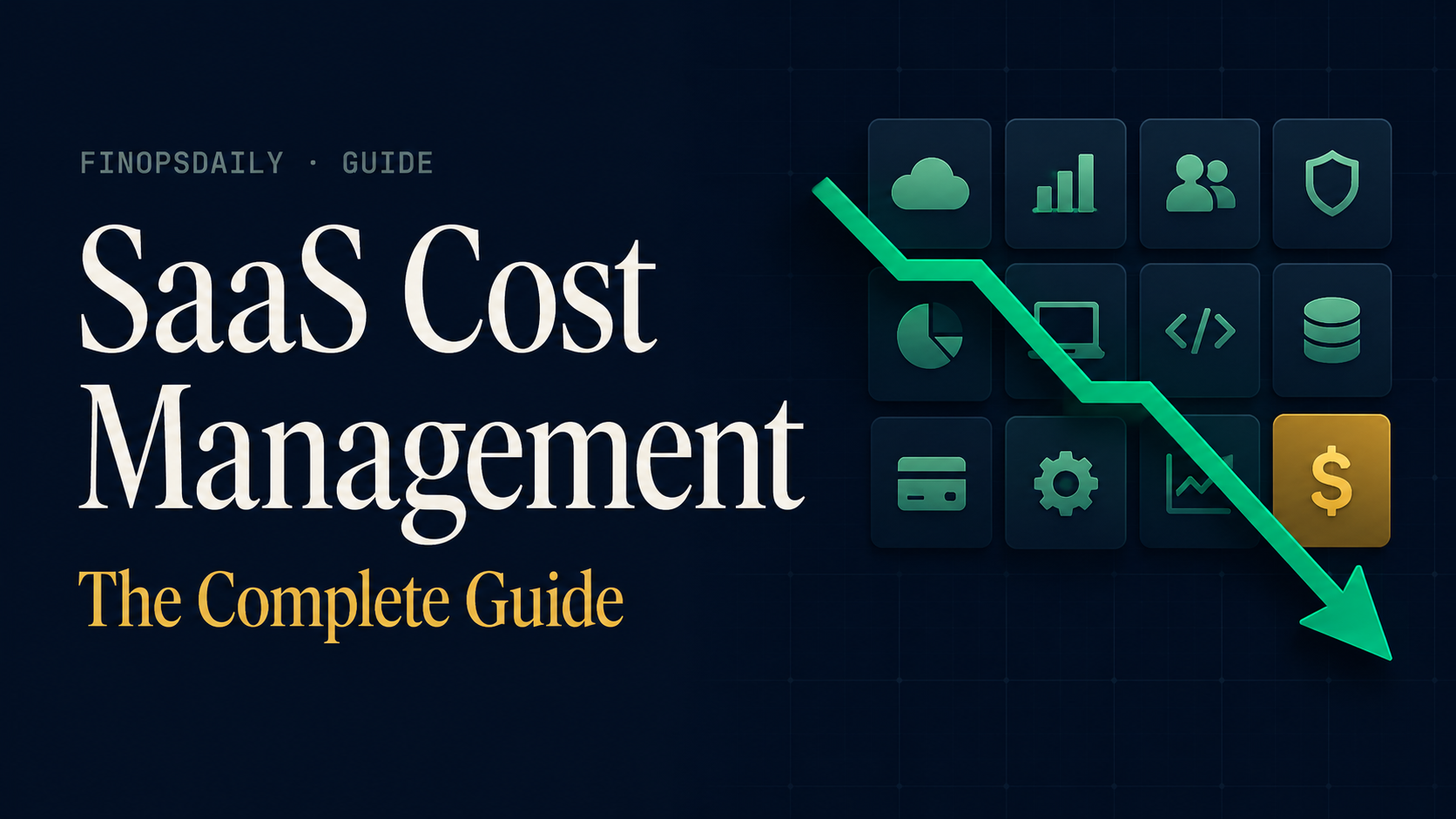
SaaS cost management is the practice of gaining visibility into, optimizing, and governing what an organization spends on software-as-a-service and cloud-based tools — from data platforms and observability to collaboration apps — so that every subscription and usage-based bill maps to real value. As FinOps has expanded beyond raw cloud infrastructure, managing SaaS and data-platform spend has become one of its fastest-growing responsibilities.
This guide covers why SaaS spend is so hard to control, the categories that matter most, and the practices that keep it in check. It’s the hub for our deep-dives on specific platforms like Snowflake and Datadog.
Key takeaways
- SaaS spend is now a core FinOps concern — most practitioners manage it, not just cloud infrastructure.
- The hardest costs are usage-based tools (Snowflake, Datadog, Databricks) where bills scale unpredictably.
- The classic wastes are unused seats, shadow IT, auto-renewals, and over-provisioned usage-based tools.
- Visibility and ownership come first; optimization and renewal governance follow.
Why SaaS cost management matters now
For years, “cloud cost” meant servers, storage, and bandwidth. That’s no longer the whole picture. The scope of FinOps has widened to cover SaaS subscriptions, software licensing, and data platforms — and according to the FinOps Foundation’s State of FinOps 2026, the large majority of practitioners now manage SaaS spend, up sharply from a year earlier.
There are two reasons it’s exploded. First, the modern stack runs on SaaS: a single company might pay for a data warehouse, an observability platform, a CI/CD tool, a CRM, and dozens of smaller apps. Second, many of these tools have shifted to usage-based pricing, which behaves like a cloud bill — it scales with consumption and can spike without warning. A data warehouse or monitoring tool can quietly become one of your largest line items.
How SaaS cost differs from cloud infrastructure cost
SaaS spend blends two pricing models, and each leaks money differently:
- Seat / subscription-based (CRM, collaboration, design tools): the waste is unused or over-provisioned seats and auto-renewals nobody reviewed.
- Usage / consumption-based (data platforms, observability, messaging): the waste looks exactly like cloud waste — over-provisioning, idle resources, and runaway usage. These behave like cloud cost optimization problems.
The trickiest tools sit in the second bucket, which is why they get their own guides below.
The biggest SaaS cost categories
Data platforms
Warehouses and lakehouses are often the single largest usage-based SaaS cost. They charge for compute time and storage, and bills balloon from oversized or always-on compute.
Observability and monitoring
Monitoring tools bill per host, per GB of logs, and per custom metric — costs that compound fast.
- How to reduce your Datadog bill
- See also our pillar on the best cloud monitoring tools.
Software licensing and subscriptions
Seat-based tools where the levers are rightsizing licenses, reclaiming inactive seats, and disciplined renewals.
Common sources of SaaS waste
- Unused and over-provisioned seats — licenses assigned to people who left or never used the tool.
- Shadow IT — teams buying tools on credit cards outside procurement, invisible to finance.
- Auto-renewals — multi-year contracts that renew automatically without a usage review.
- Usage-based surprises — data and observability tools scaling far beyond budget because no one owns the consumption.
- Tool overlap — paying for three tools that do the same job.
- Wrong tier or plan — Enterprise features paid for but unused.
Best practices for SaaS cost management
1. Build a SaaS inventory and gain visibility
You can’t manage what you can’t see. Catalog every SaaS and data tool, its cost, owner, and renewal date. Surface usage-based tools alongside your cloud bill in one view.
2. Assign ownership
Every tool and every usage-based bill needs an owner accountable for its spend — the same ownership principle that drives FinOps.
3. Rightsize seats and reclaim inactive licenses
Review utilization and reclaim seats nobody uses. For seat-based tools this is the fastest win.
4. Govern usage-based tools like cloud
For Snowflake, Datadog, and Databricks, apply cloud-style discipline: right-size, eliminate idle resources, set alerts on consumption, and optimize the heaviest workloads. The deep-dive guides above show how per tool.
5. Manage renewals proactively
Don’t let contracts auto-renew. Review usage before each renewal, right-size the commitment, and negotiate — usage-based tools often offer discounts for committing to a baseline.
6. Connect spend to value (unit economics)
Tie SaaS and data-platform spend to business outcomes — cost per customer, per feature, per query. This unit economics lens turns raw bills into decisions finance and engineering both trust.
7. Use tooling to automate
As the stack grows, a dedicated platform can ingest SaaS and cloud spend into one view, allocate it to teams, and flag anomalies. See best FinOps tools.
Where to start
Begin with an inventory and one consolidated view of spend, then attack the two biggest line items — usually your data platform and your observability tool. Reclaim unused seats for a quick win, put an owner on every usage-based bill, and add a renewal calendar so nothing auto-renews unreviewed.
Frequently asked questions
What is SaaS cost management?
It’s the practice of tracking, optimizing, and governing spend on software-as-a-service and cloud-based tools — including data platforms and observability — so each subscription and usage-based bill is visible, owned, and tied to value.
How is SaaS cost management different from cloud cost optimization?
Cloud cost optimization targets infrastructure (compute, storage, network). SaaS cost management covers software subscriptions and usage-based tools too — though usage-based SaaS (like data warehouses) is optimized with the same techniques.
What are the biggest sources of SaaS waste?
Unused or over-provisioned seats, shadow IT, auto-renewals, and runaway usage on consumption-based tools like data warehouses and observability platforms.
Why is SaaS cost now part of FinOps?
Because the modern stack runs on SaaS and many tools moved to usage-based pricing that behaves like a cloud bill. FinOps expanded its scope to govern this spend, and most practitioners now manage it.
Which SaaS tools cost the most?
Usually usage-based data platforms (like Snowflake or Databricks) and observability tools (like Datadog), because their bills scale with consumption and can spike unpredictably.
Written by the FinOpsDaily team. Last updated: 2026.