

Updated November 21, 2026. Cursor’s plans changed twice this year, so confirm current terms on cursor.com/pricing before you buy.
Cursor pricing changed more in 2026 than in the editor’s whole history. SpaceX agreed in June to buy Anysphere, the company behind Cursor, in an all-stock deal worth about $60 billion, and closed it in mid-August. On October 12, Cursor’s plans were folded into The X Subscription, a single plan covering Cursor, Grok and X Premium, priced from $8 to $200 a month.
The sticker prices went down. Whether your bill goes down depends on one question: do you mostly use Grok models, or Claude, GPT and Gemini? This guide lays out the new plans, the legacy plans many people are still on, and what each costs in practice.
Cursor pricing at a glance
| Plan | Monthly | Annual | Included usage | Third-party models (Claude, GPT, Gemini) |
|---|---|---|---|---|
| Free | $0 | n/a | Limited | Not available |
| Plus | $8 | $80 | Base pool (1x) | Not available; Grok models only |
| Premium | $30 | $300 | 4x Plus | API list price, from prepaid credit |
| Super | $100 | $1,000 | 15x Plus | API list price, from prepaid credit |
| Ultra | $200 | $2,000 | 50x Plus | API list price, from prepaid credit |
| Teams | $30, $100 or $200 per seat | Not listed | Matches the seat’s tier | API list price plus the Cursor Token Rate |
| Enterprise | Custom | Custom | Pooled | Negotiated |
Prices exclude tax. The included pool is shared across Cursor and Grok products, refreshes weekly, and is not stated in dollars. When it runs out you can buy top-ups or wait for the refresh.
What changed in October 2026
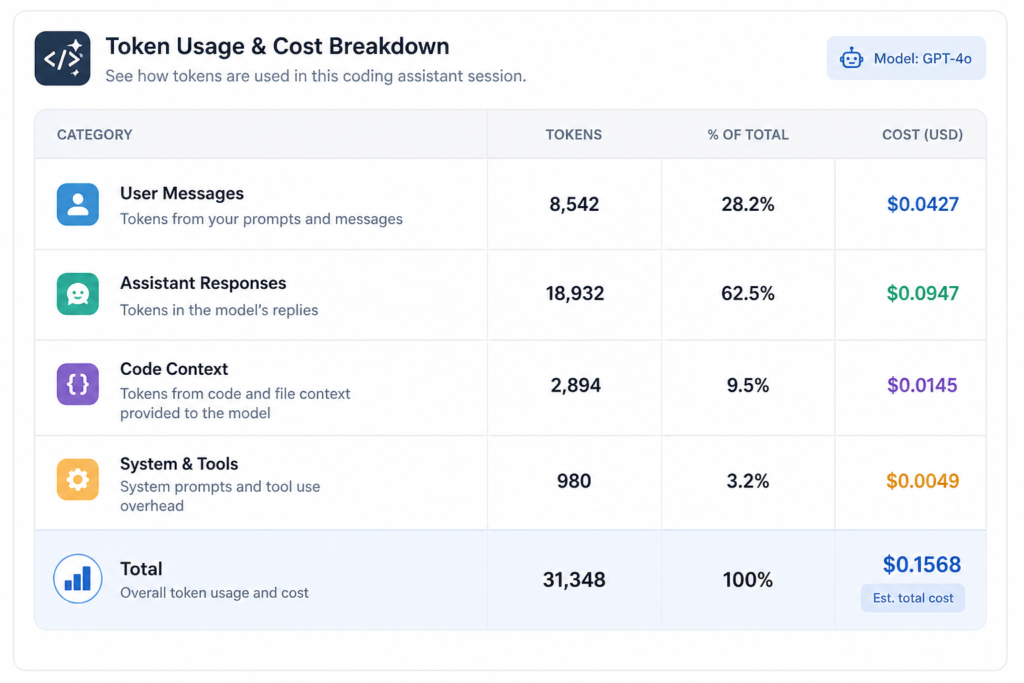
Under the old lineup, the $20 Pro plan included $20 of usage on third-party models such as Claude, GPT and Gemini, charged at their API prices. Under The X Subscription, the subscription fee covers Grok usage only. Third-party models start at the $30 Premium tier, and every request to them bills at the model’s API list price from the first token, paid from prepaid credit. That holds even on the $100 and $200 tiers.
In exchange, Grok usage got more generous. xAI says every X Subscription plan includes at least twice as much coding usage with Grok models as the comparable Cursor plan did. The Premium tier also bundles SuperGrok, Cursor Pro-level features and X Premium+, which xAI says previously cost $90 a month combined.
The Plus tier is the narrowest. At $8 it gives Cursor with Grok models only, and the Cursor models documentation says it excludes Auto, cloud agents, automations, Bugbot and your own API keys. It is not available for teams.
One more detail matters for heavy users of the rest of the bundle: Grok Bot and other Grok products draw on the same pool. Heavy Grok use outside the editor leaves less for coding.
Legacy Cursor plans
Existing subscribers can keep their current plans and their included third-party model allowances for now, and migration to the new plans is opt-in. The announcement, as quoted by The New Stack, warned that users whose usage is mostly on third-party models might pay more on the new plans and should check usage before switching.
The legacy lineup, for reference:
| Legacy plan | Price | Included usage |
|---|---|---|
| Hobby | Free | Limited |
| Pro | $20 a month | $20 of model usage at API rates |
| Pro+ | $60 a month | Larger pool |
| Ultra | $200 a month | Largest individual pool |
| Teams Standard | $40 per seat ($32 annual) | Per-seat pool |
| Teams Premium | $120 per seat ($96 annual) | 5x a Standard seat, from the June 2026 Teams update |
Legacy plans bill usage beyond the included pool on demand at the same API rates. Expect the legacy offer to narrow over time; “for now” is doing a lot of work in the announcements.
What it actually costs: three examples
These scenarios use hypothetical usage figures to show how the structure behaves. Replace them with numbers from your own usage dashboard.
A Grok-first developer. Uses Grok models for almost everything. – New plans: Plus at $8, or Premium at $30 for agents and code review. – Legacy Pro: $20. – Verdict: the new plans are cheaper, and include more Grok usage.
A Claude-heavy developer. Spends about $60 a month on Claude at API rates. – Legacy Pro: $20 including $20 of usage, plus $40 on demand = $60. – New Premium: $30 plus $60 of Claude at API list price = $90. – Verdict: staying on the legacy plan saves about $30 a month while it lasts.
A ten-person team on mixed models. Each developer uses about $25 a month of third-party models. – New Teams at $30 seats: $300 in seats plus $250 of API usage, plus the Cursor Token Rate on eligible models. – Legacy Teams Standard at $40: $400 in seats, with each seat’s pool absorbing some of the usage before on-demand charges. – Verdict: close. The answer turns on how much usage each legacy seat’s pool covers and on the token rate below.
The Cursor Token Rate on Teams
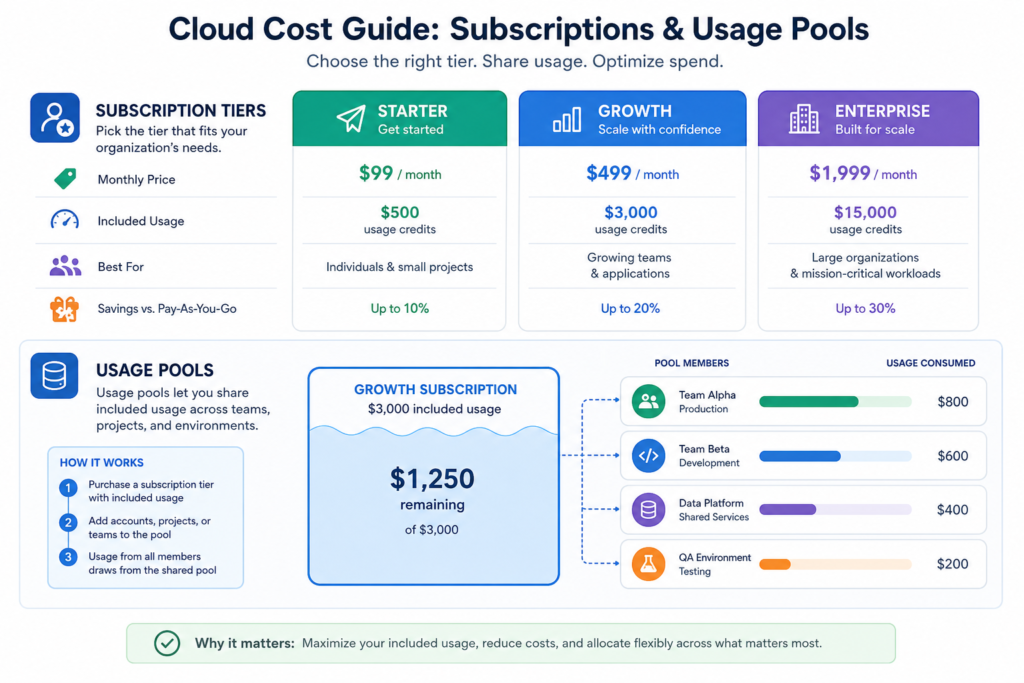
Teams and Enterprise pay one extra charge individual plans do not: a Cursor Token Rate on eligible third-party model requests, on top of API pricing. Cursor’s pricing docs list it at $0.25 per million tokens. At 50 million tokens a month that adds $12.50, small next to the API cost itself but worth including in a budget, especially for agent-heavy teams that push large contexts.
Teams and Enterprise features
Teams seats start at $30 per user, down from the previous $40 entry point, with $100 and $200 seat tiers matching the individual plans. Each seat gets the usage of its tier. Teams adds centralized billing and administration, usage analytics, team-wide privacy settings, SAML and OIDC single sign-on, and mixed seat types, so heavy users can sit on a bigger tier than everyone else.
Enterprise is quote-only and adds pooled usage, invoice and purchase order billing, SCIM seat management, group-level spend limits, audit logs, and access controls for models, repositories and MCP servers. Pooled usage is the feature that matters most for cost: light users subsidize heavy ones instead of stranding allowance.
How to estimate your Cursor bill
- Export a month of usage by model from the usage dashboard for each developer. Split Grok from third-party models.
- Price third-party usage at API rates. That is now the marginal cost on the new plans.
- Pick the seat tier per person rather than one tier for everyone. Mixed seats exist for a reason.
- Add the Cursor Token Rate for Teams and Enterprise.
- Compare legacy and new plans side by side before opting in.
- Set spending caps on third-party model credit, which Cursor supports.
For the practices that keep usage under control (model defaults, context hygiene, seat reviews), see Cursor cost management. For how tokens turn into dollars, read cost per token.
How Cursor compares
The rest of the AI coding market moved to usage billing too. GitHub Copilot switched all plans to AI credits metered at API rates on June 1, 2026, with Pro at $10, Pro+ at $39, Business at $19 per user and Enterprise at $39 per user. OpenAI and Anthropic sell coding agents inside their own subscriptions and APIs. See OpenAI Codex pricing and ChatGPT vs Claude vs Gemini enterprise pricing.
The common thread: seats are cheap, model usage is the bill. Treat AI coding tools as a SaaS spend management line with a consumption component, and apply the controls in FinOps for AI.
Questions people ask
How much does Cursor cost per month?
Free, then $8 (Plus), $30 (Premium), $100 (Super) or $200 (Ultra) on The X Subscription. Teams seats start at $30 per user. Legacy Pro remains $20 for existing subscribers.
Does Cursor still include Claude?
On the new plans, Claude and other third-party models are available from Premium up but bill at API list price from prepaid credit. Legacy plans still include a third-party allowance for now.
Is the $8 Plus plan enough for coding?
It works if Grok models suit you. It excludes third-party models, cloud agents, Bugbot and your own API keys.
Should I switch from legacy Pro to the new plans?
Check your usage first. If most of it is on third-party models, staying on legacy Pro is usually cheaper. If you mostly use Grok, the new plans give more for less.
Can I get annual pricing?
Yes for individual tiers: $80 for Plus, $300 for Premium, $1,000 for Super and $2,000 for Ultra.
Sources
- Cursor pricing
- Cursor docs: Models and pricing
- The X Subscription bundles Cursor with Grok and X Premium (The New Stack)
- Cursor and the X Subscription: what changed (T-Minus AI)
- What is The X Subscription (andrew.ooo)
- SpaceX makes its $60bn Cursor takeover official (The Next Web)
- SpaceX closes Cursor acquisition (Pasquale Pillitteri)
- Cursor Teams pricing update, June 2026 (Cursor blog)
- GitHub Copilot is moving to usage-based billing (GitHub Blog)


Pingback: Agentic Coding Cost: Why It Is Hard to Predict and Control
Pingback: SaaS Spend Management: 2026 Playbook With Benchmarks
Pingback: FinOps for AI: How to Manage AI Costs in 2026
Pingback: Cursor Cost Management: Limits, Alerts and Seat Control
Pingback: ChatGPT vs Claude vs Gemini Enterprise Pricing (2026)