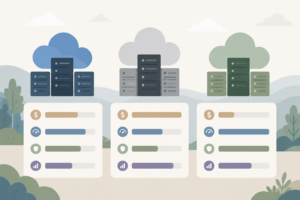
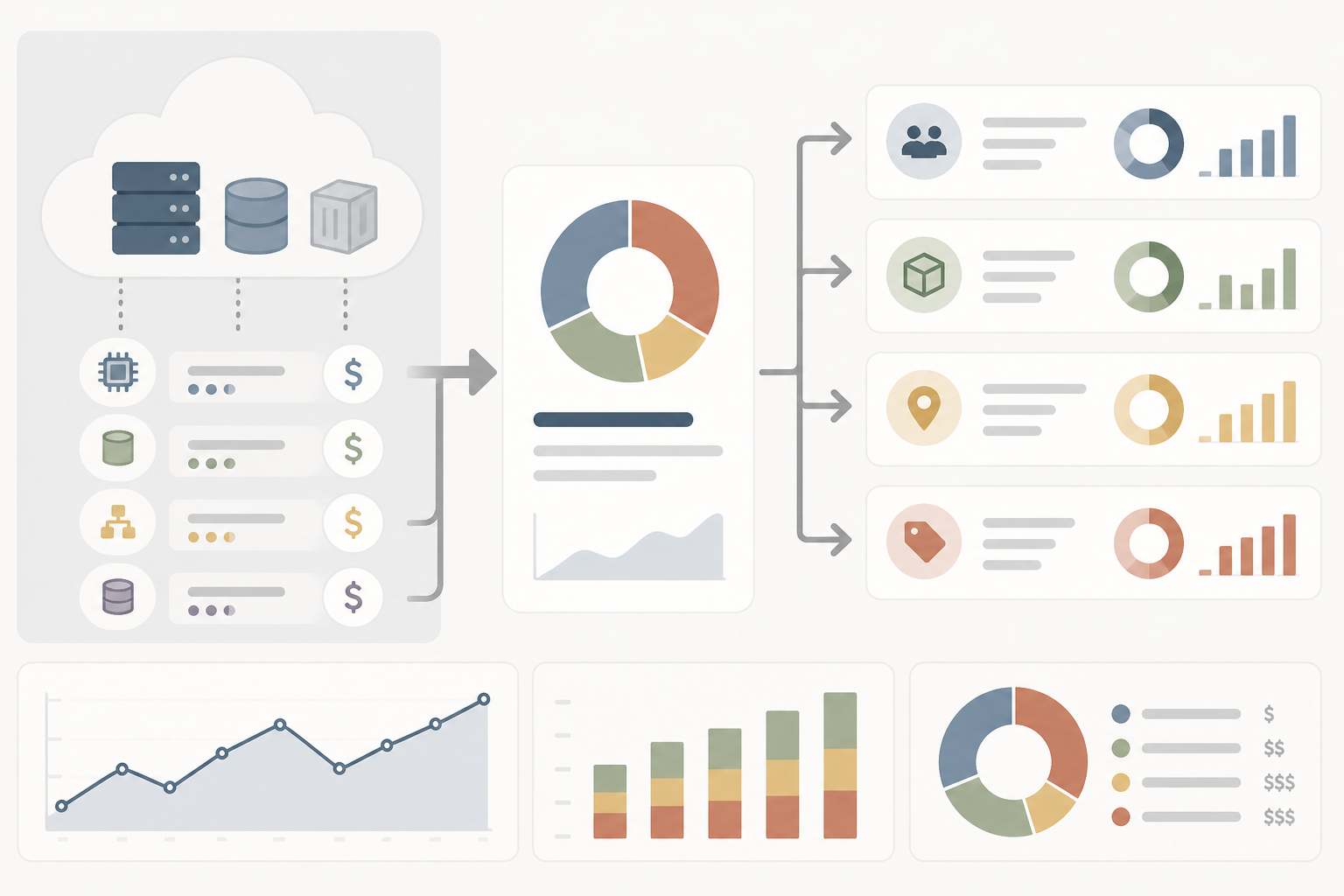
CloudZero Review: CloudZero offers a unified, real‑time cost‑intelligence platform built around dimensional cost visibility, anomaly detection, and business‑impact ranked optimization recommendations. It’s designed for engineering‑driven FinOps alignment backed by real cost outcomes.
This post may contain affiliate/partner links. If you buy or sign up through them, we may earn a commission at no extra cost to you.
Last updated: September 6, 2026
What is CloudZero?
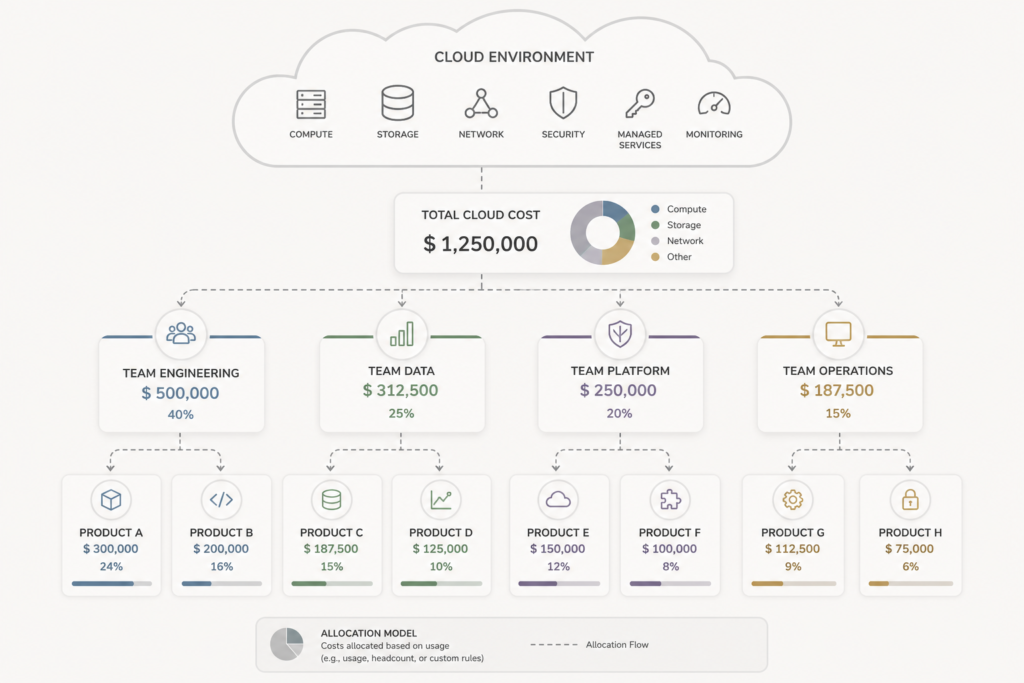
CloudZero is a financial control plane for cloud and AI spend. It ingests cost data from providers like AWS, Azure, GCP, Kubernetes, Databricks, Datadog, Snowflake, Anthropic, OpenAI and others. The platform replaces siloed billing with dimensional allocation—by team, product, feature, customer, or custom business unit—without relying solely on tagging.
Every cost, including Kubernetes, is attributed to business‑relevant dimensions, and surfaced via Explorer, anomaly alerts, and AI‑powered workflows. It includes optimization recommendations backed by real financial impact. ([docs.cloudzero.com](https://docs.cloudzero.com/docs/cloudzero?utm_source=openai))
Which features does CloudZero include?
- Unlimited scale features: unlimited users, dashboards, cost sources, dimensions, and hourly data granularity. ([cloudzero.com](https://www.cloudzero.com/pricing/?utm_source=openai))
- Explorer & Dimensions: instant slicing of cost by team, product, customer—visual or code-based. ([docs.cloudzero.com](https://docs.cloudzero.com/docs/cloudzero?utm_source=openai))
- Anomaly Detection: ML‑powered, zero‑config alerts on unexpected spend shifts. ([docs.cloudzero.com](https://docs.cloudzero.com/docs/cloudzero?utm_source=openai))
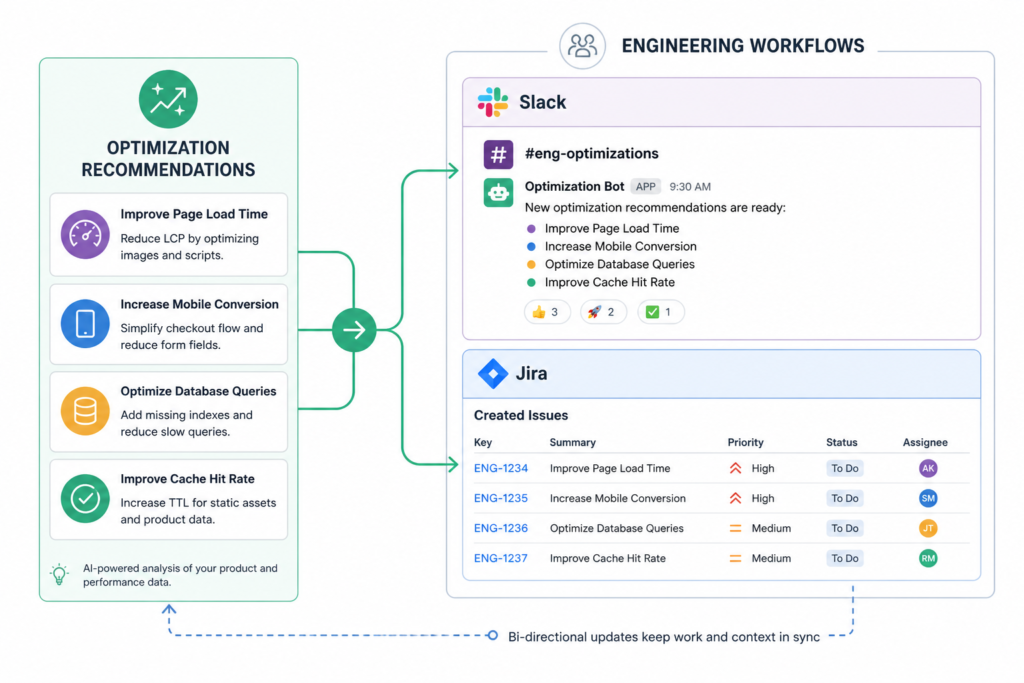
- Optimize module: AI‑ranked savings recommendations tied to business units, pushed into Slack, Jira, or automation systems; tracks realized savings. ([cloudzero.com](https://www.cloudzero.com/platform/optimize/?utm_source=openai))
- Unit Economics: cost per customer, product, feature, team, even token-level AI metrics. ([docs.cloudzero.com](https://docs.cloudzero.com/docs/cloudzero?utm_source=openai))
- AI Hub: natural‑language Q&A interface over your cost data. ([docs.cloudzero.com](https://docs.cloudzero.com/docs/cloudzero?utm_source=openai))
- FinOps Account Manager (FAM): designated expert supports custom metrics, coaching, best practices. ([cloudzero.com](https://www.cloudzero.com/solutions/cost-optimization/?utm_source=openai))
- Dashboards & Alerts: built‑in standard dashboards, budget forecasting, notifications via email/Slack. ([cloudzero.com](https://www.cloudzero.com/solutions/cost-optimization/?utm_source=openai))
- AI & Cloud ROI Focus: maps spend to models, prompts, features, tying cloud/AI spend to margins and P&L. ([cloudzero.com](https://www.cloudzero.com/?utm_source=openai))
How does pricing work?
CloudZero’s pricing is custom‑quoted and scales based on the size and complexity of your cloud or AI environment, rather than by user count or dashboard limits. It includes all features through a single subscription. ([cloudzero.com](https://www.cloudzero.com/pricing/?utm_source=openai))
On AWS Marketplace, CloudZero offers two models:
- On‑Demand: charged per $1K of AWS monthly spend—around $19 per $1K spend.
- Custom contract: enterprise negotiation (e.g. sample list price shown at $170,000/year), plus overages similarly priced. ([aws.amazon.com](https://aws.amazon.com/marketplace/pp/prodview-qvzdmjdawnphe?utm_source=openai))
Verify before publish: Confirm current pricing tiers and regional variations.
What do users love? (Pros)
- Customizable dashboards & dimensions: Users praise flexibility to break cost visibility by workload, environment, customer, etc. ([g2.com](https://www.g2.com/products/cloudzero/reviews?utm_source=openai))
- Excellent customer support & FAM: Many reviewers note FAM involvement feels like an extension of their team with proactive guidance. ([g2.com](https://www.g2.com/products/cloudzero/reviews?utm_source=openai))
- Smooth setup: Initial setup and viewing data in days to weeks. ([g2.com](https://www.g2.com/products/cloudzero/reviews?utm_source=openai))
- Kubernetes and AI model cost granularity: Accurate reporting at token/model/cluster level. ([g2.com](https://www.g2.com/products/cloudzero/reviews?utm_source=openai))
- Real business context: Cost insights mapped to customer/product/feature drive decision-making and unit economics. ([g2.com](https://www.g2.com/products/cloudzero/reviews?utm_source=openai))
What users point out as drawbacks (Cons)
- Learning curve for advanced features: Some users find Analytics dashboard building slow or cumbersome. ([g2.com](https://www.g2.com/products/cloudzero/reviews?utm_source=openai))
- Need deeper usage metrics: Explorer doesn’t always expose low‑level metrics; analysts may need custom dashboards. ([g2.com](https://www.g2.com/products/cloudzero/reviews?utm_source=openai))
- Limited RBAC granularity: Role-based controls need more flexibility. ([g2.com](https://www.g2.com/products/cloudzero/reviews?utm_source=openai))
- Complexity in Optimize view: Recommendations can be dense; Kubernetes insights/navigation need polish. ([g2.com](https://www.g2.com/products/cloudzero/reviews?utm_source=openai))
- Forecasting & notification granularity gaps: Desire for predictive insights and split notifications per channel. ([aws.amazon.com](https://aws.amazon.com/marketplace/pp/prodview-qvzdmjdawnphe?utm_source=openai))
- Pricing model could be a hurdle: AWS-spend‑based model may challenge recovery for internal cost allocation. ([reddit.com](https://www.reddit.com/r/AZURE/comments/1l2bsip/cloud_cost_optimization_platforms_that_dont_suck/?utm_source=openai))
- Questionable allocation fidelity: Some users report limits in multi-dimensional spend attribution accuracy. ([reddit.com](https://www.reddit.com/r/FinOps/comments/1u2aukr/removed/?utm_source=openai))
Who should consider CloudZero—and when does it shine?
| Use Case | Why CloudZero Works |
|---|---|
| FinOps teams needing business‑aligned visibility | Maps spend to business units, enables cost per customer/product insights |
| Engineering‑led cost management | Real‑time anomaly alerts, optimization suggestions pushed into engineering workflows (Slack, Jira) |
| AI cost tracking | Token/model‑level attribution, piecing AI spend into ROI signals |
| Kubernetes‑heavy environments | Hourly granularity and full allocation of cluster costs |
| Organizations needing white‑glove onboarding | FAM support ensures alignment and adoption |
How does CloudZero compare with other FinOps tools?
What sets CloudZero apart is its dimensional cost model and integration into engineering workflows. While many tools offer dashboards, CloudZero emphasizes business impact ranking and real-time actioning. Its FAM support and AI Hub further differentiate it. Tools lacking that depth often stop at visibility without optimization integration. ([reddit.com](https://www.reddit.com/r/startups/comments/1rp8soy/cloud_cost_optimizers_painpoints_i_will_not/?utm_source=openai))
Steps to evaluate CloudZero in your environment
- Define key dimensions: product, customer, team, feature—confirm CloudZero supports them.
- Request pricing based on current spend and desired allocation fidelity.
- Run a proof of value (POV): connect real billing, track recommendations, monitor realized savings over 30 days.
- Test integration into workflows: anomaly alerts, optimization pushes into Slack/Jira.
- Validate attribution accuracy: Kubernetes, AI model, token‑level costs.
- Assess support: onboarding, dashboard templating, FAM engagement.
Inline illustrations
Frequently Asked Questions
How accurate is CloudZero’s cost allocation without tags?
CloudZero uses its CostFormation engine to allocate 100% of your cloud and Kubernetes spend into dimensions you define—even without tags. Accuracy depends on how well those dimensions reflect your actual structure; verify in situ. ([cloudzero.com](https://www.cloudzero.com/platform/?utm_source=openai))
What is the timeline to see savings impact?
After marking a recommendation as Addressed, CloudZero tracks realized savings by comparing 30‑day cost before vs. after. You typically start seeing measurable impact within days, with stabilization in 30 days. ([docs.cloudzero.com](https://docs.cloudzero.com/docs/overview?utm_source=openai))
Does CloudZero support AI spend insights?
Yes. It can break down cost by model, prompt, user, or token, map to revenue and ROI, and alert on anomalies—all in real time. ([cloudzero.com](https://www.cloudzero.com/?utm_source=openai))
How steep is the learning curve?
Basic use (Explorer, anomaly alerts) is intuitive. Building advanced Analytics dashboards or Optimize workflows may require more ramp‑up and FAM collaboration. ([g2.com](https://www.g2.com/products/cloudzero/reviews?utm_source=openai))
How is pacing change managed across teams?
Optimize pushes prioritized recommendations into familiar tools like Slack or Jira, assigns ownership, and tracks follow‑through—ensuring cost actions don’t stall in dashboards. ([cloudzero.com](https://www.cloudzero.com/platform/optimize/?utm_source=openai))
Looking for alternatives or deeper FinOps tooling comparisons? See our best FinOps tools roundup hub for a broader perspective.
Disclosure: CloudZero branding and screenshots are for identification; this review is based on publicly available documentation and verified user feedback.
About the Author: Nhon Dang is a cloud infrastructure and operations professional with over 10 years of hands‑on experience in cloud services, infrastructure, and business operations. His expertise spans the design, deployment, and operation of cloud platforms and managed services, including virtual machines (VMs), Kubernetes (K8s), object storage (S3), managed databases, Apache Kafka, and cloud GPU infrastructure.
Throughout his career, Nhon has worked closely with cloud infrastructure and service operations, gaining practical experience in building reliable, scalable, and cost‑efficient cloud environments. His work combines technical expertise with business and operational insight, giving him a practical perspective on how cloud technologies perform in real‑world production environments.
Nhon writes about cloud infrastructure, Kubernetes, DevOps, distributed systems, cloud computing, infrastructure operations, and cloud service management, sharing insights based on hands‑on experience rather than purely theoretical knowledge.
His goal is to provide practical, technically accurate, and experience‑driven guidance that helps engineers, technical teams, and businesses make better decisions when adopting and operating cloud technologies.
Moving to parkland explore top rated schools, gated communities, beautiful parks, and a peaceful lifestyle near fort lauderdale & boca raton.