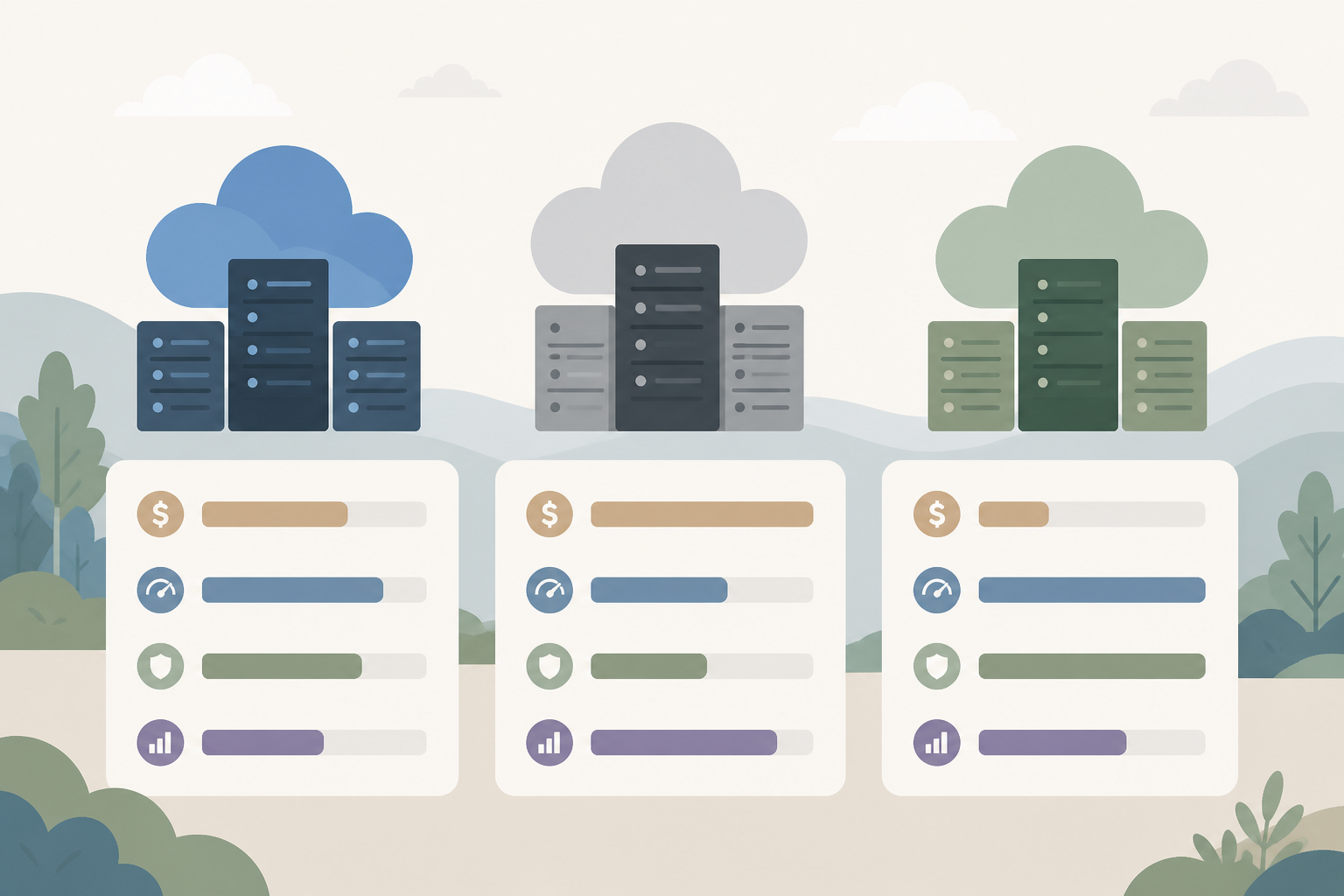
Finout, CloudZero, and Ternary each solve cloud cost management differently—Finout via AI-driven allocation, CloudZero via engineering-centered unit economics, and Ternary via finance-led investment intelligence. This comparison shows when each is the best fit for your team and stack.
This post may contain affiliate/partner links. If you buy or sign up through them, we may earn a commission at no extra cost to you.
Last updated: September 6, 2026
At a Glance: Finout vs CloudZero vs Ternary
All three tools aim to optimize your cloud bills, but each has a different primary user, integration approach, and depth of analytics:
| Feature Area | Finout | CloudZero | Ternary |
|---|---|---|---|
| Main Buyer | FinOps/Cloud | Engineering/DevOps | Finance/CFO |
| Cloud Support | Multi-cloud, strong SaaS, AI | Primarily AWS, some Azure & GCP | Multi-cloud (GCP-focused) |
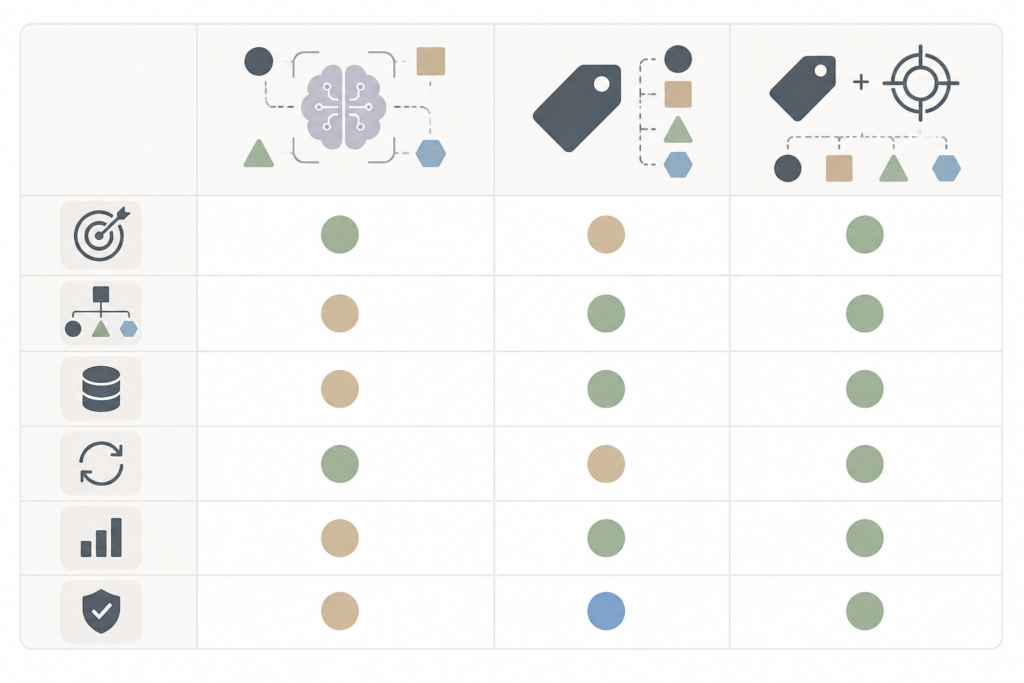
| Allocation Model | AI-driven Virtual Tagging | Tag-based Dimensions | Tag/FOCUS based |
| AI Spend Coverage | Native (OpenAI, Anthropic) | Custom integration needed | Emerging/partial |
| Kubernetes Visibility | Deep (namespace → container) | Good with setup | Depends on deployment |
| Financial Planning | Forecasts, budgets, variance | Basic | FP&A workflows |
| Onboarding Speed | Days (agentless) | Depends on tagging | Depends on FOCUS/tag hygiene |
Which platform handles cost allocation best?
Cost allocation is the backbone of FinOps. It enables accurate assignment of every dollar spent—whether to a business unit, a feature, or a customer.
Finout
Finout’s patented Virtual Tagging leverages AI to interpret metadata, Kubernetes labels, resource names, and cloud-specific identifiers, then auto-generates rules for cost allocation. Unlike tag-based solutions, it covers 100% of spend—even for resources with inconsistent or missing tags—without changes to your resources, making it ideal for complex, multi-cloud, or fast-growing environments.
For example, a company using both AWS and GCP with legacy resources typically sees 35–45% of costs unallocated in classic tag-based systems. Finout’s approach can reduce this unallocated portion to near-zero within weeks of adoption, without requiring a resource/tag audit sprint.
CloudZero
CloudZero uses “Dimensions”—custom groupings based primarily on tags and resource metadata. If your environment has a mature, standardized tagging strategy, CloudZero’s model can segment spend by customer, feature, environment, and more, offering engineering-aligned insights. However, onboarding and maintenance become time-consuming if tags are inconsistent.
Edge case: If you have dynamic, short-lived resources (common in Kubernetes), manual tagging gaps can mean cost attribution misses unless complemented by additional telemetry.
Ternary
Ternary’s allocation accuracy is closely tied to your tagging discipline and compliance with the FinOps Foundation’s FOCUS Open Cost & Usage Specification. This makes Ternary especially strong for organizations already committed to industry-standard reporting—especially on GCP, where native integration is deepest. If you lack robust tagging and FOCUS setup, expect a significant implementation project to reach accurate attribution.
Who supports AI spend out of the box?
Tracking spend for services like OpenAI, Anthropic, and other LLM providers is critical for teams building or operating AI-powered platforms at scale. Each platform’s approach differs:
- Finout offers direct, no-code integrations with OpenAI, Anthropic, and Cursor; costs from these APIs can be mapped to business units or products within the same reporting dashboards as your cloud infrastructure. AI costs are automatically included in consolidated views, making it easier to capture true per-feature or per-customer economics.
- CloudZero does not offer native AI provider integrations. You’ll need to build custom ingestion pipelines (e.g., via webhook or CSV export) and develop custom Dimensions to attribute that spend, which increases engineering overhead and delays insight.
- Ternary is in early stages of adding AI ingestion. Its current strengths lie in SaaS and IaaS cost mapping, but detailed LLM provider support remains on their roadmap.
Real-world example: An AI SaaS firm using OpenAI GPT-4 APIs saw its inference bill jump by 70% in a single quarter, with usage volume spread across dozens of customer integrations. Finout’s built-in AI cost connectors enabled immediate breakdown by customer and workload—while an attempted CloudZero integration required several sprints to pipe usage into AWS Cost and Usage Reports as custom resources.
How do they support Kubernetes and container visibility?
Deep container cost allocation is increasingly vital as teams shift from VM-centric to microservices architectures.
- Finout captures Kubernetes costs at the namespace, pod, and container levels using Virtual Tags—without requiring you to patch labels onto every resource. It can attribute idle and shared infrastructure (e.g., cluster nodes, load balancers) using sophisticated rules, so engineering teams see true workload and team costs including overhead. For instances where clusters auto-scale, Finout provides feature flags to treat unused capacity as shared, alerting on underutilization.
- CloudZero provides Kubernetes visibility via a Prometheus-based agent and metadata integration. It supports granular pod-level breakdowns, but engineering effort is needed to map these to business constructs via Dimensions. If you have hybrid clusters across clouds, multi-cluster visibility is possible but not automatic.
- Ternary supports Kubernetes billing, but depth varies. If you’re deploying on Google Kubernetes Engine (GKE) and have accurate tags/labels, Ternary delivers detailed GCP-native allocation reports. For other environments, setup may require cross-team coordination to align on FOCUS-compatible cost signals.
Example: A SaaS platform with six Kubernetes clusters and hundreds of microservices uses Finout’s dashboard to visualize and alert on the most expensive namespaces and the idlest clusters weekly, automating cost right-sizing reviews.
Which platform offers the broadest integration coverage?
Consider every source of spend—not just core cloud compute or storage. Here’s how each platform stacks up:
| Platform | Integration Breadth | Depth/Notable Gaps |
|---|---|---|
| Finout | AWS, Azure, GCP, OCI, Kubernetes, Snowflake, Databricks, Datadog, OpenAI, Anthropic, Cursor | Includes SaaS, AI, and cloud data warehouse; direct integrations reduce spreadsheeting and manual data mapping |
| CloudZero | Primarily AWS; supports GCP/Azure with added effort | Strong for AWS-centric SaaS; limited out-of-box support for SaaS/AI tools |
| Ternary | AWS, Azure, GCP, Oracle Cloud | Deepest on GCP/FISCO/FOCUS, less SaaS/AI coverage |
Finout’s built-in connectors for SaaS and AI sources can save finance teams weeks per quarter versus manual CSV exports or BI builds.
Alerting, budgeting, and financial governance capabilities?
Finout
Finout includes robust financial governance tooling:
- ML-powered anomaly detection for unexpected spikes, with customizable thresholds and automatic Slack/email alerts.
- Budgeting/forecasting: Set up hierarchical budgets (e.g., org > department > team), automate forecasting (seasonality-aware), track variances in real time, and generate multi-year financial plans. Finout’s dashboards are alignable to both finance and engineering use cases.
- Optimization (CostGuard): Identifies idle resources, right-size opportunities, and commitment coverage gaps, suggesting both short-term and strategic savings. Reseller margin and transfer pricing are supported for SaaS enablers or cloud resellers.
CloudZero
- Alerts: Focuses on actionable cost/spend trend notifiers for engineering (e.g., sudden service spike, unplanned cluster growth). Slack/Teams supported.
- Budgeting: Limited mostly to setting static budgets and alerting on overruns—engineering-focused rather than finance-driven.
- Optimization: Recommendations are present, but less granular than Finout (typically highlights outliers, not specific underutilized resources).
Ternary
- Financial governance: Dashboards are tailored for FP&A and the Office of the CFO, with a focus on SaaS/cloud spend compliance, budget tracking, and enterprise approval workflows.
- Optimization: Secondary to governance and reporting; optimization nudges exist but lack technical depth for engineering.
Example: A FinOps team using Finout triggers monthly reports sent to both engineering leads and finance, including the top 10 variances to budget by product line and the top 10 idle Kubernetes resources, bridging gaps between both groups.
Onboarding and time to value: What’s the experience?
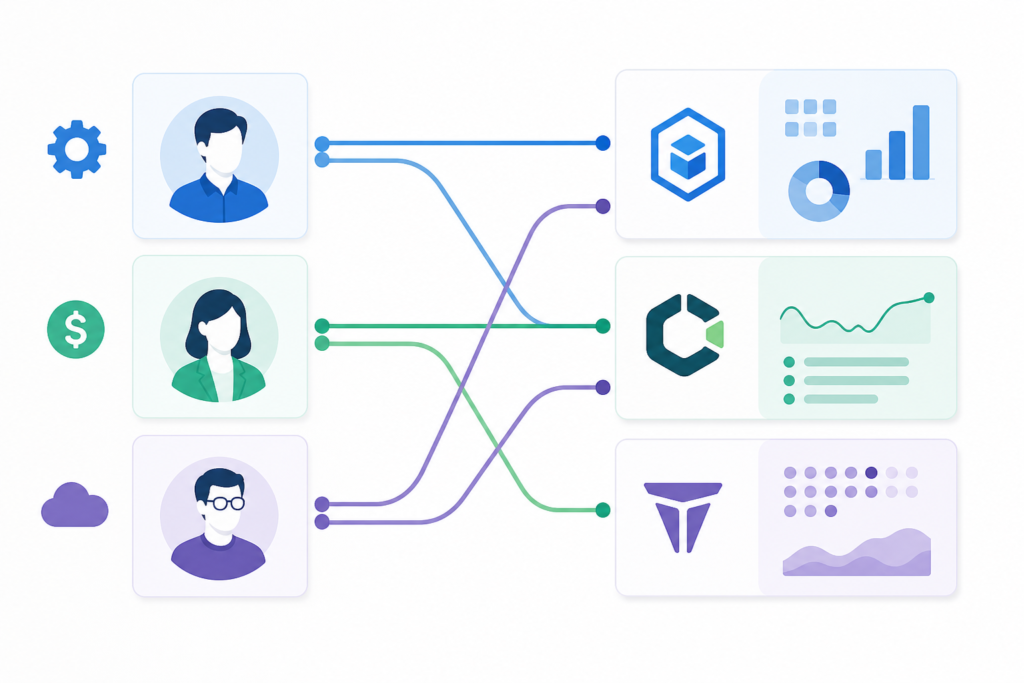
The speed and effort required to integrate and make use of a platform is often a dealbreaker:
- Finout operates agentless with API-based onboarding for all major clouds and SaaS; many customers reach accurate attribution and useful forecasting within a few days, thanks to no tagging pre-req.
- CloudZero onboarding ranges from 2–6 weeks for teams lacking clean tags, due to front-loaded engineering effort for Dimension and telemetry setup. Mature tagging can halve this timeline but rarely escapes engineering review cycles.
- Ternary onboarding can be rapid (provided tags/FOCUS are already in place) but may require multi-week cleanup and policy rollouts for organizations starting from scratch. CFOs/finance teams tend to lead onboarding, though engineering buy-in accelerates feature set unlocks.
Caution: Most failed or stalled implementations (across all three tools) trace back to poor tag hygiene or lack of buy-in from finance or engineering—factor change management and resourcing into your evaluation.
Pricing models: What to expect
Pricing is opaque—vendors require direct quotes, especially at scale. The biggest differences:
- Finout: Flat-fee pricing tiers, tied to committed cloud and AI spend, not actual percentage of spend (a relief for hyperscalers). Lower tiers may pay extra for customer attribution or Kubernetes integrations; at enterprise tier, all-in coverage likely. Free trial available; actual price band subject to contract.
- CloudZero: Subscription-based with unlimited users, dashboards, and cost dimensions. Pricing is indexed to AWS spend (“platform fee + overages”) and scales up at higher spend. Engineering setup and custom integrations are included for a single negotiated price. Quote required.
- Ternary: Strictly enterprise, custom contracts. Expect traditional procurement workflows and possible additional setup or success fees.
| Platform | Pricing Model | Notable Conditions |
|---|---|---|
| Finout | Flat-fee by tier | K8s/customer attribution may be add-ons; enterprise usually all-in |
| CloudZero | Subscription by cloud spend | Unlimited users; AWS spend-driven overages |
| Ternary | Custom enterprise | Negotiated contracts, may include onboarding/consulting |
Tip: Finout’s flat pricing can be cost-competitive for multi-cloud or AI-heavy teams who dislike cloud spend percentage tithes. However, a single-cloud shop with great tagging might find CloudZero’s structure more transparent.
Pros and cons summary
| Platform | Pros | Cons |
|---|---|---|
| Finout |
|
|
| CloudZero |
|
|
| Ternary |
|
|
When should you choose each?
Choose Finout if:
- You’re multi-cloud or have Kubernetes at scale.
- Your tagging is poor, inconsistent, or legacy-based.
- AI provider costs matter (OpenAI, Anthropic, etc).
- You want insights fast without engineering overhaul.
- You need both optimization and finance planning in one interface.
Choose CloudZero if:
- Your engineering team already maintains excellent tagging.
- You’re an AWS SaaS business seeking unit costs per customer or feature.
- Your main pain point is developer accountability, not finance workflow.
- You’re less concerned about AI, SaaS, or advanced forecasting features.
Choose Ternary if:
- You’re heavily invested in GCP or run multi-cloud with FOCUS compliance.
- Your finance team leads cloud spend review.
- You require standardized reporting for board or regulatory processes.
- Your org already enforces tag/label standards rigorously.
Deep Dive: Real-World Scenarios and Edge Cases
Multi-cloud scale-ups with technical debt
Fast-growing SaaS firms often acquire teams/clouds bringing tag chaos and mystery spend. Finout thrives here—able to “auto-correct” tagging blind spots and merge spend across AWS, Azure, GCP, and Snowflake into one virtual model. By contrast, CloudZero and Ternary require you to standardize first, which can exhaust resources before insight is achieved.
B2B SaaS with strict per-customer P&L
When your business must show cost-per-customer (for contract negotiation or internal transfer pricing), CloudZero’s cost-per-dimension enables precise calculation if customer tags are universal. If customers bring their own subaccounts or resource IDs (common with managed SaaS workloads), aligning tags across parties remains a hurdle. Finout’s Virtual Tag inheritance and AI matching can fill gaps, but complex customer-tenant setups may still require manual mapping.
Heavily regulated enterprise (finance/healthcare)
Enterprises where monthly reporting, audit trails, and financial governance are paramount tend to adopt Ternary. Its focus on FOCUS compliance and finance workflows helps satisfy auditors and enable budget controls—though onboarding is only viable with process maturity and IT finance collaboration.
How to evaluate the right tool for your stack
- Define your cloud mix—are you AWS-only, or running mixed cloud/SaaS/data platforms? Multi-cloud demands breadth; AWS-only teams may prefer depth.
- Assess tagging maturity—Finout shines with dirty tags or migrations; CloudZero and Ternary reward up-front cleanup.
- AI workloads—If LLM provider spend is growing, Finout’s built-in ingestion saves months of custom work.
- User types—Who will use the reports? Engineering (CloudZero), finance (Ternary), or both (Finout)? Consider workflow integration (APIs, Slack, SSO, export formats).
- Optimization and planning—Finout is strongest where cost optimization and financial forecasting meet; CloudZero wins on fast engineering accountability, Ternary wins on compliance/governance.
- Total cost of ownership—Factor in onboarding, resourcing, and ongoing admin: virtual tags vs tagging sprints, finance onboarding, required engineering support, and price escalators as your cloud consumption grows.
Frequently Asked Questions
Is Finout cheaper than CloudZero?
Finout typically uses flat pricing tiers based on committed spend and is competitive for organizations with multi-cloud, Kubernetes, or AI usage—cost transparency is its pitch. CloudZero’s cost is directly tied to AWS spend regardless of architecture. For small AWS-centric teams with good tagging, CloudZero may be the lower-cost option. Actual figures vary and require direct quotes—always compare based on your current and projected spend.
Can Finout show cost-per-customer like CloudZero?
Yes. Finout’s Virtual Tagging supports detailed cost-per-customer, cost-per-feature, and even cost-per-workspace reporting across all integrated sources including cloud, SaaS, and LLM providers. The key benefit: it works even if tag hygiene is uneven, which is common as orgs scale.
Which handles AI costs easiest?
Finout is currently ahead with native connectors for OpenAI, Anthropic, and Cursor—no manual ingestion needed and no additional fees in most plans. Both CloudZero and Ternary require custom data ETL and manual mapping, delaying insights and complicating workflows for AI-first orgs.
How long to get value from each?
Finout provides dashboards and allocation within days for most orgs, thanks to its agentless, tag-independent setup. CloudZero onboarding can stretch to weeks if tagging is lacking; dimension and integration workflows need engineering cycles. Ternary’s onboarding speed is largely dictated by FOCUS compliance and data hygiene; clean shops see value fast, others face a project of 1–2 months just to baseline.
Does Finout include budget forecasting?
Yes—Finout’s Financial Plans provides hierarchical budgets (parent, department, sub-team), multi-period forecasts, scenario modeling, and real-time variance reporting. CloudZero focuses on spend alerting rather than forward-looking forecast, and Ternary’s budget tools suit finance teams but may lack engineering alignment.
Can these platforms integrate with data warehouses and BI tools?
Finout offers out-of-the-box connectors for data warehouses like Snowflake and Databricks, so you can analyze cloud spend alongside product or sales data. CloudZero and Ternary enable data export (CSV, API) for custom BI integration, but in-house teams must map cost lineage themselves if desired.
What happens if my company changes cloud providers or expands into AI?
Finout’s broad integration footprint and single workspace approach make it agile for evolving cloud/AI/SaaS mixes. CloudZero works best if you remain AWS-centric. Ternary is a safe bet if your roadmap leans GCP and finance-first controls, but adapting to new AI providers may involve waiting for new features or custom API work.
What are common implementation pitfalls and how to avoid them?
Pitfalls include underestimating data hygiene (tags, labels), failing to secure buy-in from both engineering and finance, and picking a tool based solely on surface demos rather than real use-case fit. To mitigate, always run a real-world proof of concept with a subset of production data, and involve both FinOps and technical teams in the decision process. Avoid tools whose onboarding looks easy on paper but requires months to reach actionable insights.
Inline Illustrations
Below are visual aids to make comparison concrete:
About the Author: Nhon Dang is a cloud infrastructure and operations professional with over 10 years of hands-on experience designing, deploying, and running cloud platforms, managed services, Kubernetes clusters, SaaS, and FinOps programs. He writes about cloud infrastructure, optimization, and service operations from real-world experience to help engineering and business teams get practical, actionable results.