
Last updated: September 3, 2026
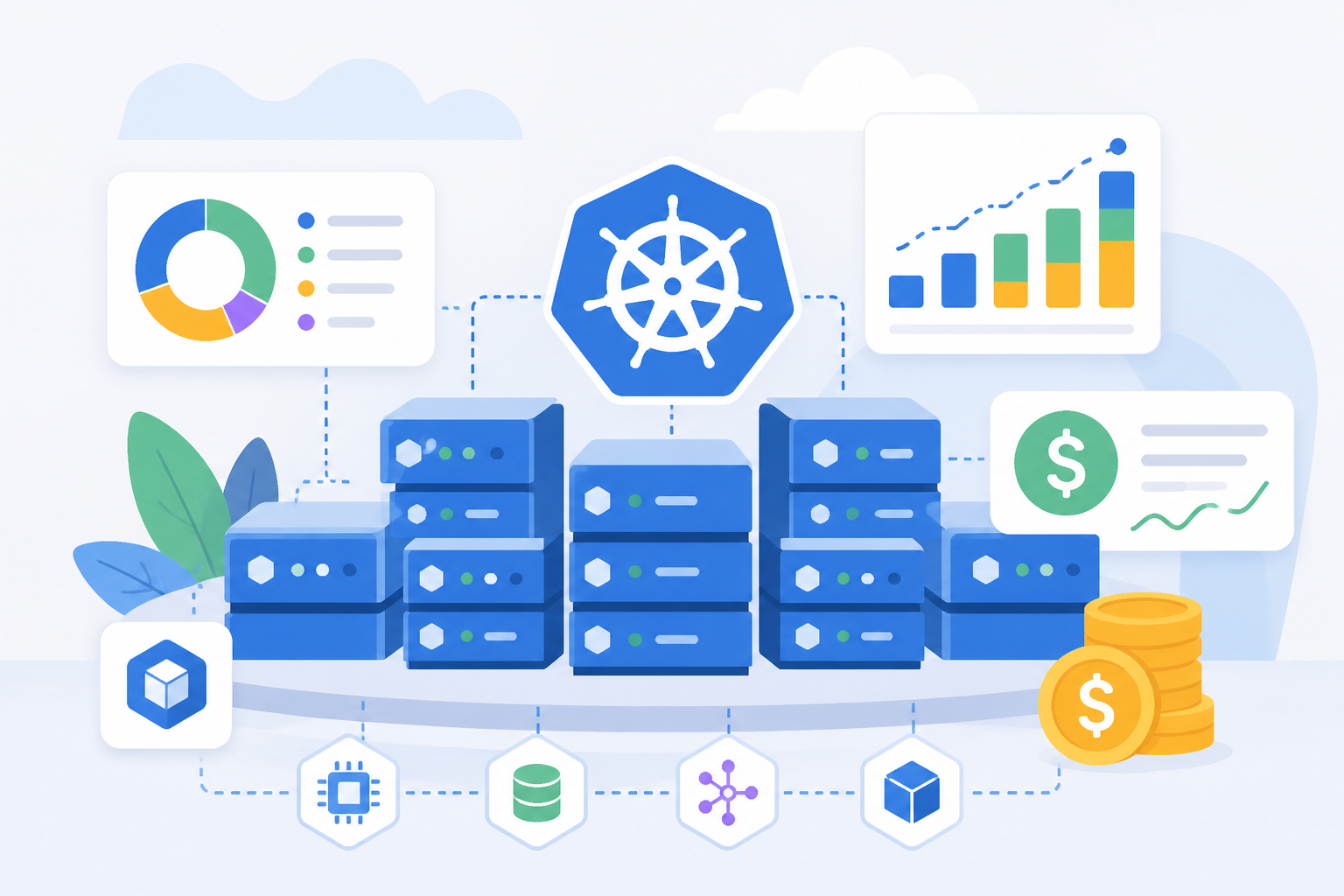
Monitoring Kubernetes costs means attributing cloud charges accurately to namespaces, workloads, teams, and customers—then acting on that data to reduce waste. This guide explains how to implement that reliably.
What is Kubernetes cost monitoring?
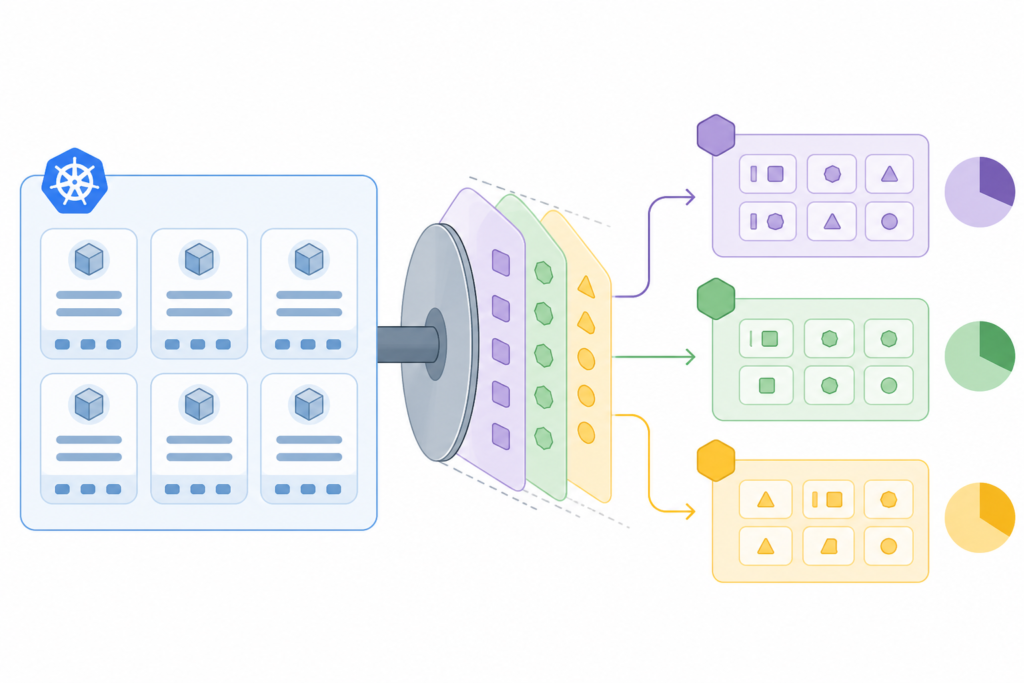
Kubernetes cost monitoring is the practice of tracking Kubernetes‑generated cloud spend and breaking it down by cluster, namespace, pod, workload, team, or customer, so finance and DevOps can understand who is spending what—and act to reduce overprovisioning. This becomes crucial because cloud bills charge at the node level, not per workload, hiding actual usage and waste. ([devzero.io](https://www.devzero.io/blog/best-kubernetes-cost-monitoring-platforms?utm_source=openai))
Why does Kubernetes cost monitoring matter?
- Cloud bills reflect node-level charges, not per‑pod usage—so you lose visibility on who uses what. ([devzero.io](https://www.devzero.io/blog/best-kubernetes-cost-monitoring-platforms?utm_source=openai))
- Typical clusters run at only 5–15% actual utilization, while you pay for 100%. ([devzero.io](https://www.devzero.io/blog/best-kubernetes-cost-monitoring-platforms?utm_source=openai))
- Visibility alone doesn’t reduce cost—monitoring tools show waste, automation tools act on it. ([devzero.io](https://www.devzero.io/blog/best-kubernetes-cost-monitoring-platforms?utm_source=openai))
- By 2026, recommendations can be applied without pod restarts, thanks to Kubernetes 1.35’s in‑place pod resize. ([devzero.io](https://www.devzero.io/blog/best-kubernetes-cost-monitoring-platforms?utm_source=openai))
Which tools should you evaluate for Kubernetes cost monitoring?
Tools fall into two categories:
- Visibility tools: They report cost allocation—OpenCost (open‑source), Kubecost (commercial on OpenCost), CloudZero, Costanalyst for combining Kubernetes and broader cloud/SaaS costs. ([costanalyst.ai](https://costanalyst.ai/best/kubernetes-cost-tools?utm_source=openai))
- Automation platforms: They act too—CAST AI, ScaleOps, PerfectScale, nOps, etc., applying rightsizing, node/bin packing, spot automation to reduce actual spend. ([costanalyst.ai](https://costanalyst.ai/best/kubernetes-cost-tools?utm_source=openai))
Comparison Table: Visibility vs. Optimization Platforms
| Use Case | Best Choice | Why |
|---|---|---|
| Free, open baseline allocation | OpenCost | Vendor‑neutral CNCF project for allocation engine. You manage Prometheus, dashboards. ([devzero.io](https://www.devzero.io/blog/best-kubernetes-cost-monitoring-platforms?utm_source=openai)) |
| Polished UI, governance, FinOps support | Kubecost (IBM) | Enterprise product built on OpenCost, adds alerts, budgets, forecasts. ([devzero.io](https://www.devzero.io/blog/best-kubernetes-cost-monitoring-platforms?utm_source=openai)) |
| Unit economics, cost per customer view | CloudZero | Combines K8s spend with full cloud/SaaS bill for FinOps reporting. ([devzero.io](https://www.devzero.io/blog/best-kubernetes-cost-monitoring-platforms?utm_source=openai)) |
| Unified Kubernetes + SaaS/cloud visibility | Costanalyst | Pulls multiple billing sources into one view; less namespace depth. ([costanalyst.ai](https://costanalyst.ai/best/kubernetes-cost-tools?utm_source=openai)) |
| See & act automatically with zero restarts | DevZero | Visibility plus restart‑free rightsizing across clouds. ([devzero.io](https://www.devzero.io/blog/best-kubernetes-cost-monitoring-platforms?utm_source=openai)) |
| Automated optimization at scale | CAST AI, ScaleOps, nOps, etc. | Rightsizing, scaling, spot orchestration to cut 50–70% compute. ([costanalyst.ai](https://costanalyst.ai/best/kubernetes-cost-tools?utm_source=openai)) |
How to get started: step‑by‑step guide
- Define attribution strategy: Tag clusters, namespaces by team, environment, cost center, or customer. Decide if chargeback is by requested resources or actual usage; usage is accurate but harder. ([devzero.io](https://www.devzero.io/blog/best-kubernetes-cost-monitoring-platforms?utm_source=openai))
- Select a visibility tool first: Start with OpenCost for free allocation, or Kubecost if you need UI and support. Connect it to Prometheus and your cloud billing source. ([devzero.io](https://www.devzero.io/blog/best-kubernetes-cost-monitoring-platforms?utm_source=openai))
- Deploy and verify allocation: Aim to break down cost by namespace, deployment, label. Validate that computed spend matches your cloud bill to within a small margin. ([finout.io](https://www.finout.io/hubfs/K8s_cost_management_guide.pdf?utm_source=openai))
- Review utilization dashboards: Compare CPU/memory request vs actual usage; identify idle deployments, old test clusters, orphan volumes. Typical cost waste might be 5–15% utilization vs paid 100%. ([sivaro.in](https://sivaro.in/articles/kubernetes-cost-monitoring-tools-a-2026-comparison/?utm_source=openai))
- Act on insights—manual first: Rightsize pods, delete unloved clusters, tune HPA, reduce requests, clean up volumes. Monitor impact via dashboards. ([sivaro.in](https://sivaro.in/articles/kubernetes-cost-monitoring-tools-a-2026-comparison/?utm_source=openai))
- Consider automation where safe: If using Kubernetes 1.35+, tools like DevZero, CAST AI, or ScaleOps can apply rightsizing without restarts. Evaluate trade‑offs. ([devzero.io](https://www.devzero.io/blog/best-kubernetes-cost-monitoring-platforms?utm_source=openai))
- Govern, alert, forecast: Use Kubecost or CloudZero to set budgets, alerts, and forecast future spend. Tie reports to finance and engineering. ([devzero.io](https://www.devzero.io/blog/best-kubernetes-cost-monitoring-platforms?utm_source=openai))
Concrete example numbers
Suppose your Kubernetes spend runs $100k/month. After deploying OpenCost, you discover a staging namespace alone is costing $10k/month with only 2% utilization. You delete it and save $8k immediately.
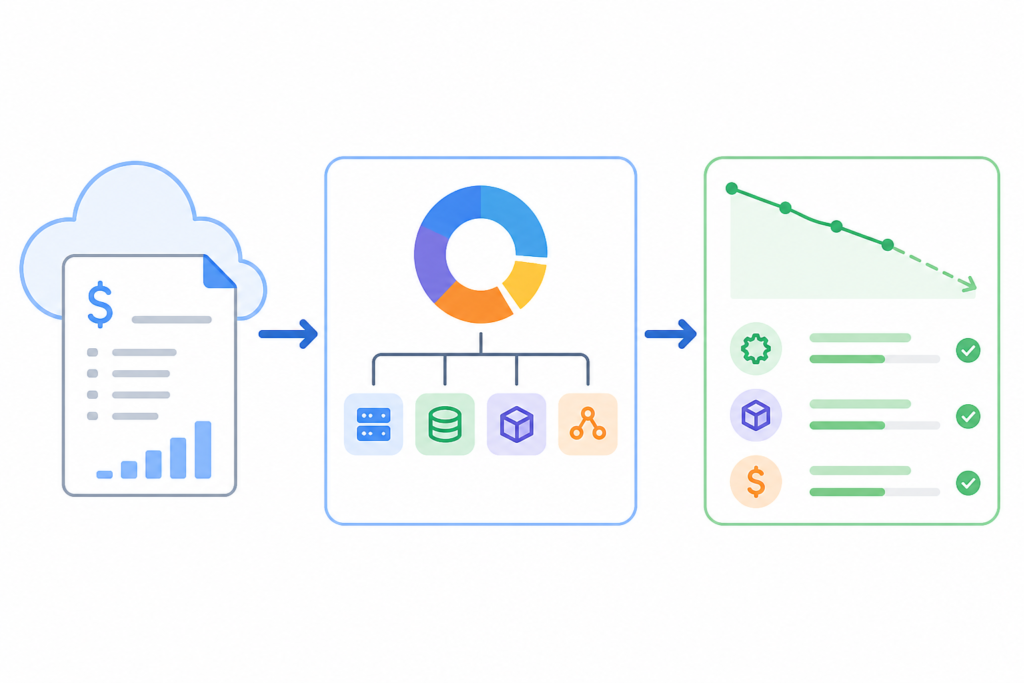
Separately, workloads in prod are over‑requested by 200% on CPU. Right‑sizing reduces cost by 40%. Validating this in Kubecost confirms the savings—proving value to your FinOps team.
What “monitoring” often misses—and how to fill the gaps
- No visibility into transient pods or orphaned volumes: Cost tools must handle short‑lived workloads and idle resources. Verify inclusion in allocation. ([sivaro.in](https://sivaro.in/articles/kubernetes-cost-monitoring-tools-a-2026-comparison/?utm_source=openai))
- Ignored network or storage cost: Tools vary in including network egress or storage. Confirm what’s in scope and align to true cloud bill. ([reddit.com](https://www.reddit.com/r/kubernetes/comments/1f44df5?utm_source=openai))
- Missing multi‑cluster or multi‑cloud rollups: Some tools don’t aggregate across clusters—you may need dashboards or governance accordingly. ([devzero.io](https://www.devzero.io/blog/best-kubernetes-cost-monitoring-platforms?utm_source=openai))
- Automation without safety nets: Automation platforms may change scaling or requests—start in read‑only mode, validate, add approvals. ([devzero.io](https://www.devzero.io/blog/best-kubernetes-cost-monitoring-platforms?utm_source=openai))
How does Kubernetes resource monitoring tie in?
Resource monitoring via metrics-server, Prometheus, Grafana, etc., tracks CPU, memory, errors, operational health—but doesn’t translate into dollars. Cost monitoring overlays billing data onto that telemetry. Use them together: telemetry shows usage; cost tools show what that usage costs and where to act. ([kubernetes.io](https://kubernetes.io/docs/tasks/debug/debug-cluster/resource-usage-monitoring/?utm_source=openai))
Frequently Asked Questions
- What’s the difference between cost monitoring and cost optimization?
- Cost monitoring reports spend allocation; cost optimization takes action to reduce it (rightsizing, scaling, reclaiming). Monitoring shows the waste; optimization closes the loop. ([devzero.io](https://www.devzero.io/blog/best-kubernetes-cost-monitoring-platforms?utm_source=openai))
- Is OpenCost sufficient by itself?
- Yes for visibility—it’s free and neutral—but you’ll need to self‑host Prometheus, dashboards, and interpret results manually. It lacks automation and multi‑cluster governance. ([devzero.io](https://www.devzero.io/blog/best-kubernetes-cost-monitoring-platforms?utm_source=openai))
- Can tools resize pods without disruption?
- Yes—with Kubernetes 1.35+ in‑place pod resize, tools like DevZero and CAST AI can apply sizing changes without restarts, making automation safer. ([devzero.io](https://www.devzero.io/blog/best-kubernetes-cost-monitoring-platforms?utm_source=openai))
- How do I track cost per team or namespace?
- Use consistent labels on namespaces or deployments (e.g. team=frontend). Cost tools allocate spend using these labels. Decide whether to charge by requests or actual usage. ([sivaro.in](https://sivaro.in/articles/kubernetes-cost-monitoring-tools-a-2026-comparison/?utm_source=openai))
- Which tool works across Kubernetes and broader cloud/SaaS spend?
- CloudZero and Costanalyst integrate Kubernetes spending into your wider cloud/SaaS bill, enabling unified FinOps reporting. ([metoro.io](https://metoro.io/blog/kubernetes-cost-optimization-tools?utm_source=openai))
